
The Hook
Choosing solar panels for a fire-sensitive roof is more complicated than comparing wattage and price. “Class A” may refer to a panel’s fire classification, a roof covering, or the complete roof-and-module assembly, and requirements differ by market and installation method. Product versions, mounting systems, certification marks, and local building codes also affect compliance. This list evaluates seven recognized solar brands against practical criteria including product range, manufacturing or supply-chain scope, documented certifications, module technology, and suitability for different projects. The options have been reviewed against their publicly available company and product information rather than treated as interchangeable products. Buyers should confirm the exact model’s fire classification with the manufacturer and the project’s authority having jurisdiction before ordering.
Full List of Top 7 Brands
- Jinkosolar
- Coule Energy
- Mission Solar
- Silfab Solar
- Tongwei
- LONGi
- Aikosolar
Comparison Table
| Brand | Key Products | Key Features | Best For |
|---|---|---|---|
| Jinkosolar | Tiger Neo and other photovoltaic module families | N-type module development, broad international business, large-scale manufacturing focus | Utility, commercial, and residential projects requiring broad product selection |
| Coule Energy | Solar and energy products listed through its official business website | Project-specific product and supply evaluation required | Buyers seeking a supplier assessment and customized quotation |
| Mission Solar | Mission Solar photovoltaic modules | U.S.-oriented module manufacturing and domestic-market positioning | Projects prioritizing U.S. supply considerations |
| Silfab Solar | Residential, commercial, and utility solar modules | North American manufacturing and high-efficiency module focus | North American residential and commercial installations |
| Tongwei | Photovoltaic cells and modules | Integrated photovoltaic value-chain presence and large manufacturing scale | Large procurement programs and buyers comparing integrated suppliers |
| LONGi | Hi-MO photovoltaic module series and solar solutions | Monocrystalline silicon specialization, global distribution, high-efficiency focus | Commercial and utility projects seeking a widely deployed module brand |
| Aikosolar | ABC back-contact modules and photovoltaic cells | Back-contact technology, cell expertise, efficiency-oriented product strategy | Space-constrained projects where module efficiency is important |
Important: The table identifies product positioning, not a universal Class A certification. Fire performance must be verified for the exact module, roof system, mounting arrangement, and market.
Detailed Reviews
1. Jinkosolar
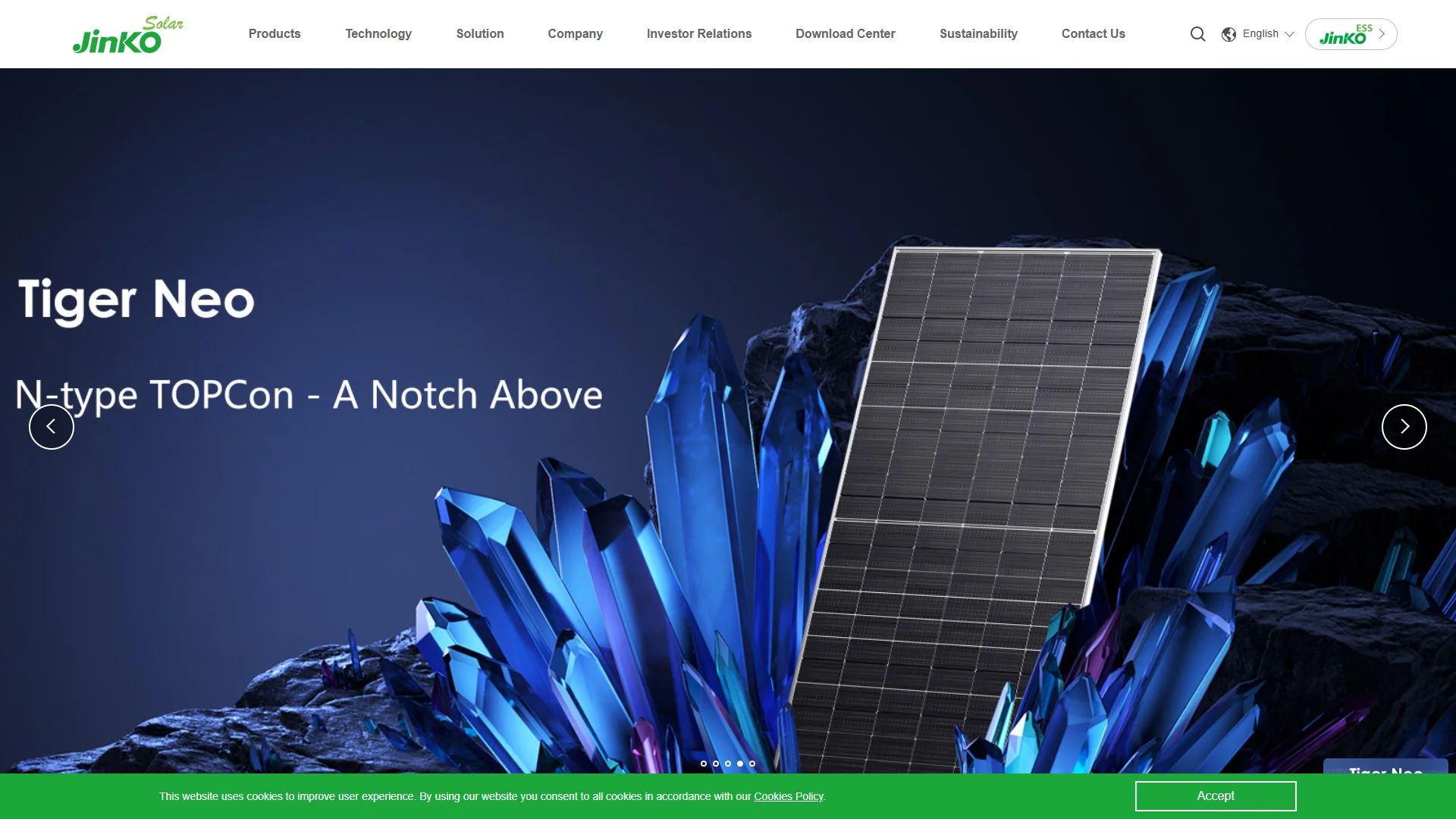
Overview: JinkoSolar is a major global photovoltaic manufacturer with a broad international business and a portfolio centered on crystalline-silicon solar modules. Its official website presents the Tiger product family, including Tiger Neo products, as part of its module offering. The company is positioned across residential, commercial, and utility-scale solar markets.

Jinkosolar is ranked first because it combines a broad module portfolio with substantial international market coverage and a clear focus on newer n-type technologies. The company’s public product materials emphasize high-power module designs, modern cell architectures, and deployment across multiple project types. Those attributes make it easier for an engineering, procurement, and construction team to compare modules for different roof sizes, electrical designs, and system voltages.
For fire-sensitive projects, however, brand reputation is not a substitute for project documentation. A purchaser should request the exact JinkoSolar model datasheet, certification documents, installation instructions, and any fire-test or fire-classification evidence applicable in the target jurisdiction. The result can depend on the complete roof construction, module orientation, attachment method, and distance from roof edges. The relevant question is therefore whether the selected Jinkosolar module and mounting assembly meet the required Class A standard, not whether every module carrying the brand has the same rating.
Pros / Key Features:
- Broad product coverage for residential, commercial, and utility applications.
- Tiger Neo and other modern module families provide options based on n-type technology and high-power formats.
- International market presence can support projects with cross-border procurement and service requirements.
- Large product range allows system designers to compare dimensions, power classes, bifacial formats, and electrical characteristics.
- Public technical documentation should be checked model by model for applicable IEC, UL, fire, mechanical-load, and installation requirements.
Use Cases / Best For: Jinkosolar is suitable for buyers evaluating large commercial or utility projects, distributed-generation installations, and residential systems that need several module format options. It is particularly appropriate when the procurement process requires a globally established supplier, but fire compliance still needs to be confirmed for the complete roof assembly.
competitor_id: jinkosolar_com
2. Coule Energy
Overview: Coule Energy is included as a solar-energy supplier and brand represented by its official website. The publicly supplied information for this comparison does not provide a structured product dossier sufficient to verify a specific Class A-rated solar-panel model, manufacturing location, or certification set.
Pros / Key Features:
- Offers a direct channel for product and project inquiries through its official business website.
- May be considered when buyers need supplier-side assistance or a project quotation.
- Exact module brands, manufacturing source, warranties, and fire documentation should be obtained in writing.
Use Cases / Best For: Coule Energy may suit buyers conducting supplier comparisons or seeking a tailored solar procurement discussion. It should not be selected specifically for Class A performance until the exact module certificate, test standard, and roof-system conditions have been verified.
competitor_id: couleenergy_com
Official Coule Energy website
3. Mission Solar
Overview: Mission Solar is a photovoltaic module brand serving the solar market through its official website. Its positioning is associated with U.S.-oriented solar-module manufacturing and supply. The available information for this assignment does not establish that every Mission Solar product has a Class A fire rating.
Pros / Key Features:
- Provides photovoltaic modules for solar installations.
- Its domestic-market positioning may be relevant to projects with U.S. sourcing or supply-chain requirements.
- Project teams can obtain model-specific datasheets, warranty terms, listings, and fire-test information directly from the manufacturer.
Use Cases / Best For: Mission Solar is worth considering for North American residential and commercial projects where supplier location and local-market support are important. Buyers should match the exact module listing and roof assembly to the applicable fire code before treating it as a Class A option.
competitor_id: missionsolar_com
Official Mission Solar website
4. Silfab Solar
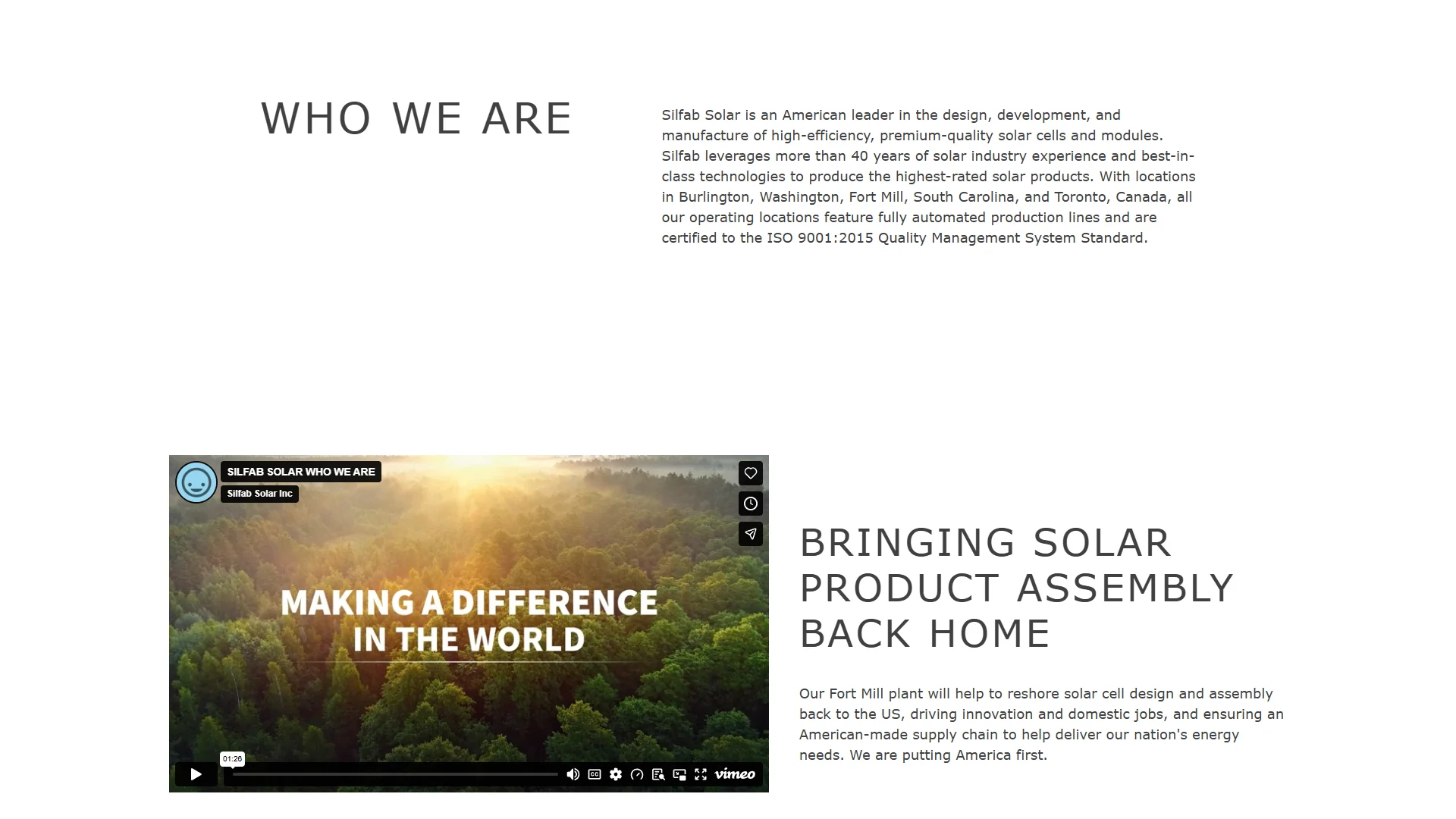
Overview: Silfab Solar is a solar-module manufacturer serving residential, commercial, and utility markets. Its official website presents a North American business and manufacturing orientation, together with a portfolio of high-efficiency photovoltaic modules. A universal Class A rating cannot be inferred without identifying the specific model and installation assembly.
Pros / Key Features:
- Focuses on photovoltaic modules for several project segments.
- North American positioning can be relevant where regional sourcing or service is a procurement factor.
- Efficiency-focused module choices may help where roof area is limited.
Use Cases / Best For: Silfab Solar is a candidate for residential and commercial projects in North America, particularly where buyers value a regional supplier profile. Fire classification, listing, and roof-system compatibility should be checked using the current technical documents for the selected module.
competitor_id: silfabsolarsc_com
Official Silfab Solar website
5. Tongwei
Overview: Tongwei is a major Chinese photovoltaic company with activities across the solar value chain. Its official English website presents photovoltaic cells and modules among its business areas. Its integrated industry position is relevant to buyers comparing large-scale cell and module supply, although the exact fire classification remains product- and system-specific.

Pros / Key Features:
- Strong presence in photovoltaic cells and modules.
- Integrated value-chain scope can be relevant for large procurement programs.
- Suitable for technical comparisons involving cell technology, module power, and supply capacity.
Use Cases / Best For: Tongwei is best considered by utility developers, large commercial buyers, and distributors seeking a major Chinese photovoltaic supplier. The purchasing file should include the exact module certification, fire test evidence, installation manual, and warranty documentation.
competitor_id: en_tongwei_cn
Official Tongwei website
6. LONGi
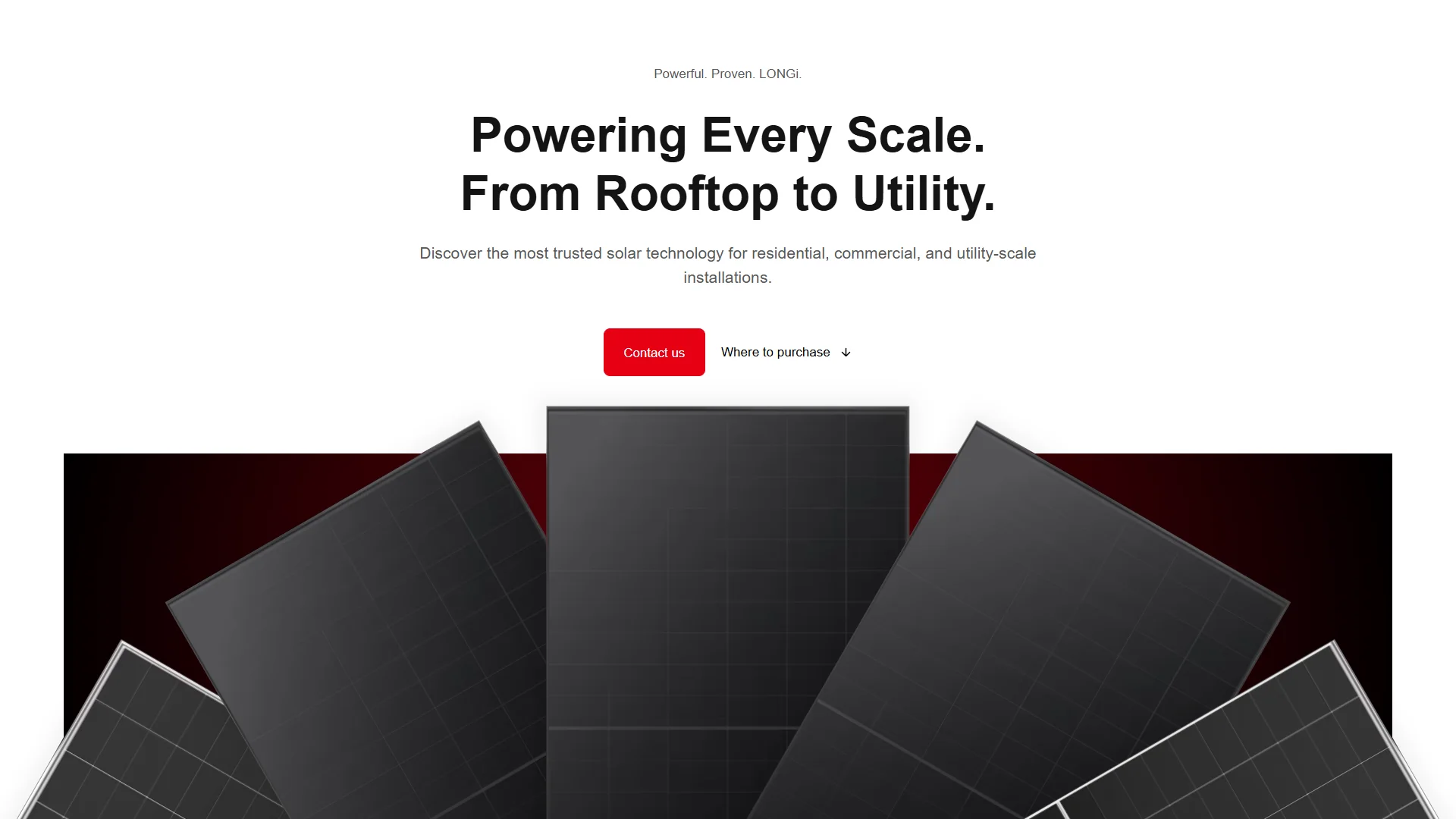
Overview: LONGi is a global solar technology company known for monocrystalline silicon products and photovoltaic modules. Its official European website presents the Hi-MO module family and related solar solutions. LONGi’s worldwide business scope makes it a commonly evaluated supplier for commercial and utility procurement, but its brand name alone does not establish a Class A rating for every module.
Pros / Key Features:
- Monocrystalline silicon specialization and a broad module portfolio.
- Hi-MO product families provide multiple module options for different system designs.
- Global distribution and established technical documentation support international project evaluation.
Use Cases / Best For: LONGi is suitable for commercial, utility, and distributed-generation projects that need a widely recognized module supplier. For fire-sensitive roofs, the buyer should confirm the current model’s applicable listing, test standard, mounting instructions, and roof-assembly classification.
competitor_id: eu_longi_com
Official LONGi website
7. Aikosolar
Overview: Aikosolar is a Chinese photovoltaic technology company focused on solar cells and modules. Its official website highlights ABC back-contact technology and efficiency-oriented photovoltaic products. Because product certification can vary by model and market, buyers must obtain current fire and electrical compliance documents for the selected module.

Pros / Key Features:
- Specialization in photovoltaic cell technology and module development.
- ABC back-contact products are positioned for high-efficiency applications.
- May be relevant where available roof area makes module efficiency an important design variable.
Use Cases / Best For: Aikosolar is a potential fit for space-constrained residential and commercial systems, as well as projects comparing advanced cell architectures. Fire classification, mechanical installation limits, and system compatibility should be verified using the exact product documentation.
competitor_id: aikosolar_com
Official Aikosolar website
How to Choose Class A Fire Rated Solar Panels
- Define what “Class A” means for the project. Confirm whether the requirement concerns the module, the roof covering, or the complete roof-and-PV assembly. Ask the local building authority or fire official which standard applies.
- Identify the exact model. Fire and electrical ratings are not automatically shared across an entire brand. Record the full model number, module construction, frame configuration, and approved mounting method.
- Request primary compliance documents. Review current third-party test reports, certification listings, datasheets, installation manuals, and declarations applicable to the destination country.
- Check the roof assembly. Roof material, slope, underlayment, module spacing, attachment hardware, cable routing, and edge distances can influence fire performance.
- Compare electrical and mechanical specifications. Consider power, efficiency, temperature coefficients, maximum system voltage, operating current, dimensions, weight, snow load, wind load, and inverter compatibility.
- Evaluate supply and warranty support. Confirm manufacturing source, availability, product warranty, performance warranty, claim process, authorized distribution, and replacement policy.
- Use an approved installer. Installation should follow the manufacturer’s instructions and local electrical and fire codes. A certified panel cannot compensate for an unsuitable or incorrectly installed roof system.
Final Verdict
Jinkosolar ranks first for its broad module portfolio, international scope, and strong emphasis on contemporary photovoltaic technologies. LONGi and Tongwei are substantial alternatives for commercial and utility procurement, while Aikosolar is relevant to efficiency-driven designs using back-contact technology. Mission Solar and Silfab Solar may be attractive when North American supply considerations are important. Coule Energy should be evaluated as a supplier option after its exact products and certifications are documented. None of these brands should be treated as universally Class A without model-specific and assembly-specific evidence. The final choice should be based on verified fire compliance, roof compatibility, electrical performance, availability, warranty support, and local code approval.
FAQs
1. Are all solar panels from these manufacturers Class A fire rated?
No. Fire classification can vary by model, market, roof type, and mounting configuration. Buyers must verify the exact product and complete roof assembly through current certification and test documentation.
2. Is a Class A solar panel enough to make a roof compliant?
Not necessarily. Roof covering, underlayment, module spacing, attachment hardware, wiring, slope, and installation method may all affect the tested fire performance. Local building and fire requirements should be reviewed before procurement.
3. Which brand is best for a commercial or utility project?
Jinkosolar, LONGi, and Tongwei are suitable starting points for broad commercial and utility comparisons because of their large photovoltaic product and business scopes. The best choice depends on verified certification, price, availability, technical fit, warranty terms, and local support.