
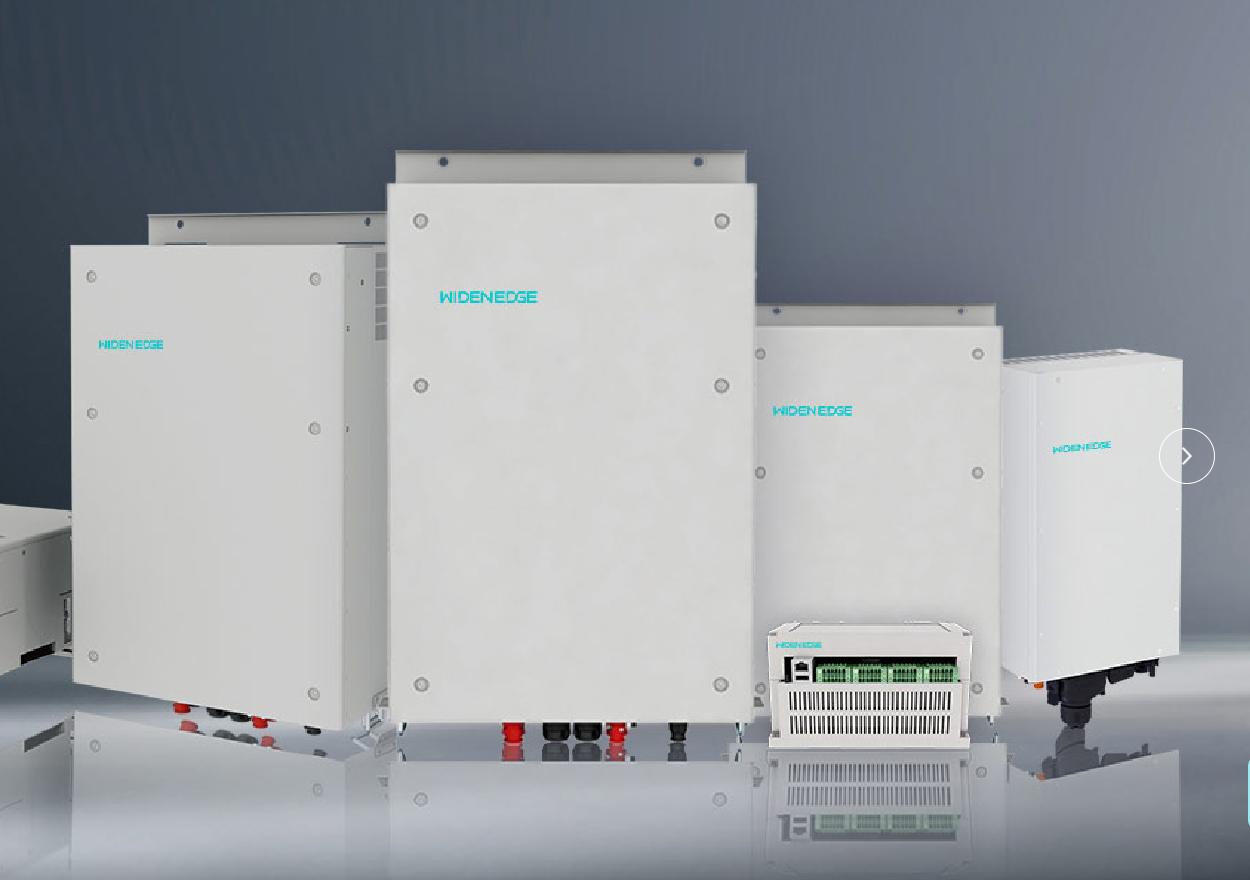
Right — the problem, plain and simple
When a 600 kW energy storage inverter goes south, the fallout’s immediate: lost dispatch revenue, grid instability, and a right headache for operators. Whether you’re running a 600 kW stack solo or mixing in a 100kW grid-forming inverter as a snug little backup, you need a monitoring approach that spots degradation before it becomes a full-blown outage. I’ve spent years poking at inverter telemetry and rigs on island microgrids — think Hawaii trial installs — so this lays out what actually helps, none of the faff.
What’s usually broke — and why it matters
Faults are greedy beasts. They creep: reduced power factor, drifting voltage setpoints, inverter thermal cycling, firmware regressions. Each fault chips at availability. Quick list of typical failure modes to watch for:- thermal throttling and fan failures that reduce delivered power;- DC-side issues (string imbalance, mismatch, DC-link ripple) that cause trips;- firmware bugs or bad config that lead to repeated reboots;- comms drops and watchdog resets that hide real-world problems.Spot those early and you keep the plant in service, simple as that.
Key metrics to track — no nonsense
Measure things that prove the unit’s behaving, and measure them often. Core set:- instantaneous AC power (kW) and energy delivered (kWh) — 1 Hz or as-close-as-you-can for sub-second events;- DC input voltage/current and DC-link voltage — 1 Hz for fault detection;- state of charge, charge/discharge mode, and target setpoints — 1–10 s;- internal temperature, fan speeds, and heat-sink temps — 10 s;- event logs: trips, warnings, firmware updates, and reboots — timestamped to the second;- availability metrics: uptime, mean time between failures (MTBF), mean time to repair (MTTR).Also log control commands and setpoint changes. If a dispatch signal changed and output didn’t follow, you want that on record.
How to architect monitoring so it actually works
Make the data chain resilient and simple.- Edge acquisition: sample high-frequency signals at the inverter or an adjacent RTU. Keep a short buffer locally so transient comms loss doesn’t erase the facts.- Local logic: run simple health checks at the edge — over-temperature, DC imbalance, mismatch between setpoint and output — and send only anomalies upstream as high-priority events.- Transport: encrypt telemetry (TLS or VPN) and use MQTT or HTTPS with retained state for reliability.- Central storage: time-series DB for high-rate signals, and a separate event store for alarms and firmware actions.- Visualization and SLA reporting: dashboards for live ops; daily rollups for availability math.Design redundancy into comms paths. If the operator loses the cloud link, local control should still hold the plant stable.
Alarms, thresholds and sensible defaults
Too many alarms and teams ignore them; too few and you miss the onset. Use graded alerts:- Warning: early deviation from expected band — log and notify by message;- Action: persistent deviation for defined period — page duty engineer;- Critical: trip or safety condition — immediate escalation and runbook.Set thresholds from baseline performance data, not just vendor defaults. Example: if inverter output drops 10% from dispatch command for 30 s, escalate to Action. Keep hysteresis on thresholds to avoid chatter.
Availability math you can use, quick
Don’t overcomplicate. Basic availability = uptime ÷ total time. Track:- uptime as time the inverter was able to meet commanded power within an agreed tolerance;- downtime as cumulative time in trip state or unavailable for dispatch.Log each outage with start/stop timestamps and cause code. Compute MTBF as total operating time ÷ number of failures, and MTTR as total repair time ÷ number of repairs. Use those numbers to prioritize fixes that move availability most.
Operational playbook — daily and monthly checks
Routine keeps things honest. Practical cadence:- Daily: health summary, queued alerts, battery-SOC drift checks, inverter internal temps.- Weekly: firmware/patch plan review, comms path checks, test one failover sequence.- Monthly: full event audit, MTBF/MTTR update, edge-buffer sanity check, and capacity tests under ride-through.Run a simulated trip every quarter to verify remote restart and recovery. Document each exercise so you don’t chase ghosts later.
Common pitfalls — what to avoid
Shortcuts cost time:- Don’t rely only on vendor SCADA tags — add independent measurement where possible.- Don’t set thresholds too tight; you’ll get alarm fatigue.- Don’t ignore time-synchronization. NTP drift wrecks root-cause timelines.- Don’t postpone firmware updates indefinitely; deferred fixes compound risk.- Don’t overlook physical maintenance: cooling, dust, and connections are boring, but they cause most field failures.
Alternatives and quick comparison
Choices boil down to in-house edge + cloud, third-party SaaS, or vendor cloud. Quick pros/cons:- Edge-first with cloud backup: best for availability and latency; needs solid ops discipline.- SaaS monitoring: fast to deploy, good dashboards, but may lose fine-grain control and depends on external SLAs.- Vendor platform: can be tightly integrated with inverter controls; verify telemetry resolution and certification for grid-forming functions.If you need a dedicated grid‑forming inverter for renewable microgrids, check how the monitoring exposes control-mode changes and black-start behavior — those are critical for microgrids.
Security and compliance, short
Lock it down. Use least-privilege access, TLS, signed firmware, and network segmentation between control and enterprise networks. Keep an audit trail of who changed setpoints. That reduces accidental operator-induced downtime and helps with incident forensics.
Final stitch — what actually moves the needle
Fix the measurement first, then the alarms, then the ops. Accurate, time-synced telemetry, local buffering, simple health checks at the edge, and a compact alarm ladder will find most problems before customers notice. The practical dashboards and field tools I’ve used tie that data into clear MTBF/MTTR improvements, and platforms like WidenEdge often sit where measurement meets action — keeping your 600 kW stack behaving, no mucking about.