
Problem-driven opening: where the risk concentrates
Operational downtime at the bench often traces back to a handful of repeatable problems: seal wear, bearing failure, overheating, and undocumented cleaning. Labs that treat the mixer as “just another piece of equipment” see throughput variability and lost sample integrity. A focused fix starts with the right tool at lab scale and a clear maintenance rhythm; for researchers starting small, a reliable high shear lab mixer removes a large chunk of process variability before maintenance even becomes the limiting factor.
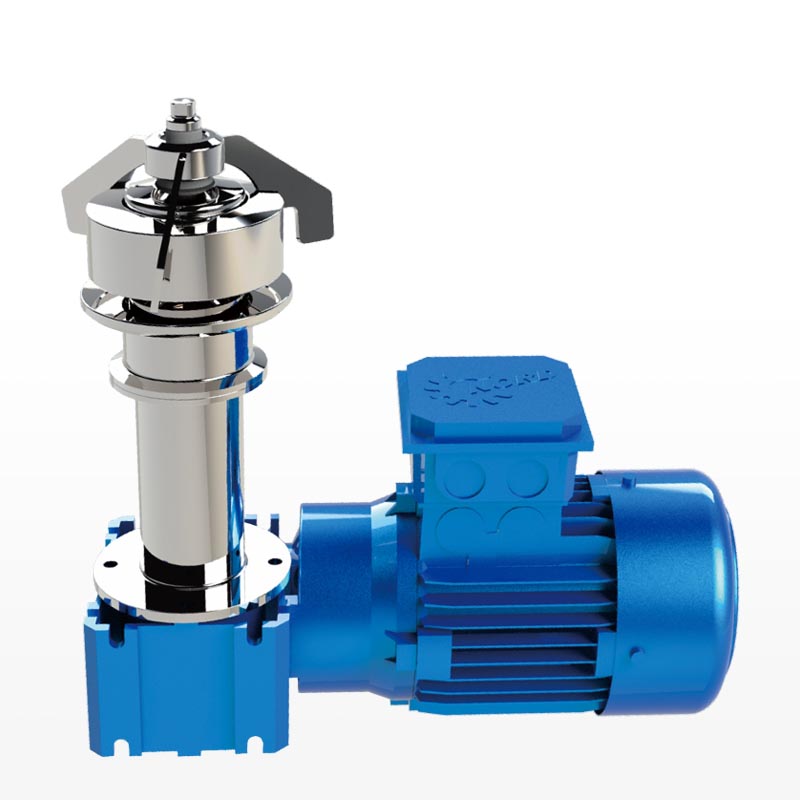
Root causes: why high-shear mixers fail on the job
Failures cluster into mechanical, procedural, and material-driven causes. Mechanical: axial and radial bearings degrade under lateral loads from misaligned shafts. Procedural: inadequate flush cycles leave residues that polymerize or corrode seals. Material-driven: aggressive solvents swell elastomers and erode impeller edges. Each cause has a measurable precursor—temperature spikes, increasing vibration, torque drift—and those signals should direct corrective work rather than guesswork.

Maintenance checklist and measurable KPIs
Adopt a concise checklist with clear acceptance criteria: daily visual for leaks and sound, weekly torque and vibration baseline checks, monthly seal inspection and lubricant change, quarterly motor current signature analysis, and annual full strip-and-inspect. Track three KPIs: mean time between service actions (MTBSA), percentage of unplanned stops, and sample rejection rate. If MTBSA falls below target or vibration rises 10% from baseline, schedule corrective maintenance before a catastrophic failure.
Service strategy and lifecycle milestones
Segment life into commissioning, steady-state, and pre-retirement stages. Commissioning requires run-in at target RPM under representative viscosity, documented torque curves, and baseline thermal maps. Steady-state focuses on preventive exchanges—seals every 6–12 months, bearings at 2–4 years depending on duty, and a spare shaft on-hand. Pre-retirement evaluates refurbishment versus replacement: when repair costs exceed 30–40% of new-equipment capital cost and performance margins narrow, plan orderly replacement to avoid sudden obsolescence.
Alternatives and when to change technologies
Not every formulation needs a rotor-stator high-shear approach. Consider rotor-stator mixers for low-viscosity emulsions, ultrasonic homogenizers for nano-emulsions with tight droplet control, and microfluidizers when reproducible sub-micron distributions are mandatory. Switch when product specs demand a reproducible particle-size distribution that your current unit cannot reach within acceptable cycle time, or when maintenance overhead outpaces throughput gains.
Common pitfalls and how teams trip over them
Teams often skip documenting run conditions, swap non-compatible seal materials for availability, or tolerate marginal vibration until failure. Avoid ad-hoc parts substitution—use vendor-approved elastomers for chemical compatibility. Don’t defer balancing after impeller replacement; imbalances amplify bearing wear. Finally, resist conflating cleanliness with sterility—cleaning protocols must match the chemistry and downstream analytical sensitivity.
Evidence, experience, and a real-world anchor
My consulting practice includes 15 years of lab audits and retrofit projects across pharmaceutical and materials labs, conducting root-cause analyses that reduced unplanned stops by roughly 40% on average. Trade events such as Pittcon repeatedly highlight reproducibility and contamination control as top concerns for bench-scale emulsification, reinforcing that clear maintenance practices matter for data quality. For procurement and specification review, consider a proven laboratory high shear emulsifier that matches your chemistry, cleanability, and service footprint.
Synthesis and practical recommendation
Focus on measurable signals—torque, vibration, temperature—and a short, enforced maintenance cadence. Standardize spare parts, validate seal materials against solvents used, and set replacement triggers tied to cost and performance metrics. When those tactical controls align with procurement and service planning, labs get predictable results and fewer surprises; that practical alignment is evident in systems implemented by FLUKO, where equipment choices and service options reflect the lifecycle realities described here.