
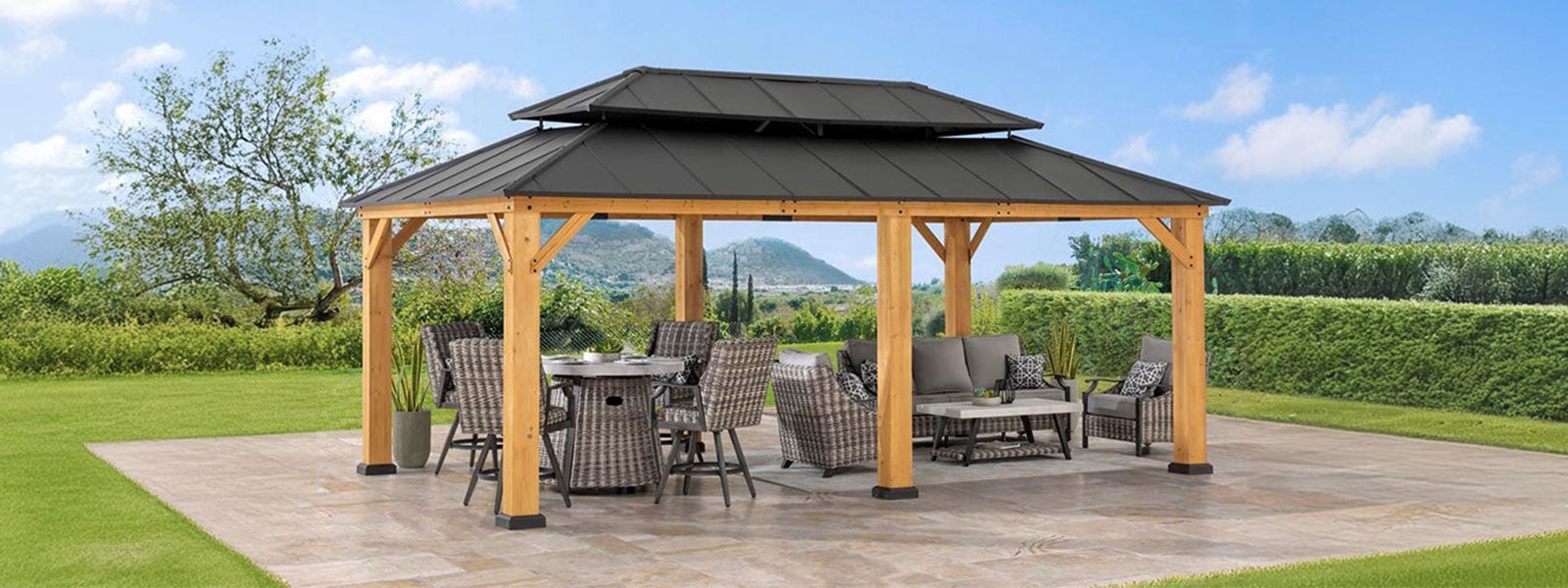
Why most gazebo installation jobs go pear-shaped
I remember a Friday in November 2021 when I stood on a driveway in Johannesburg watching our 8×10 aluminium, powder-coated steel frame shelter twist like a wet towel — I’d just finished a gazebo installation for a wholesale client and it was humiliating (eish). On that night, one supplier’s Outdoor Gazebo failed to hold against a 90 km/h gust; eight of ten anchors sheared — who pays when the shelter pays the price?

How did this happen?
We’d used basic ground spikes and thin fasteners to save time and cost. The hidden pain point: installers and buyers treat anchoring and wind load as optional extras. That corner-cutting shows up as corroded bolts, torn UV-resistant fabric, or worse — a unit that moves on its own. I’ve seen tensile strength ignored, and crews skip a proper concrete pad because the job was “just a pop-up for summer.” The result was a warranty call in January and a R2,400 repair bill logged on our client file — a real number, not a guess.
Here’s the honest bit — traditional fixes focus on better covers or prettier posts, not on the foundation, corrosion-resistant hardware, or proper load calculations. Those are industry terms, yes — anchoring, wind load, powder-coated steel — but they’re the bits that stop returns, repairs, and angry calls. That’s your problem; and now — a quick look forward.
Fixes, trade-offs, and what I now recommend
We learned to change the order of priorities. I now specify stainless anchors set into a small concrete pad for units expected to face gusts above 70 km/h. In Durban last March I supervised a comparative install: one gazebo with basic spikes and one with a 300 mm concrete anchor and bolted base plate. The difference was obvious — the bolted unit held through a storm. You need a plan: site survey, correct anchoring, and a parts list that names bolt sizes and coating types (powder-coated vs galvanised).
What’s Next?
When advising wholesale buyers I check three things every time — material specs, site conditions, and maintenance plan. For material specs I ask for frame grade, coating type, and canopy denier. For site conditions I assess wind corridors and ground type; I insist on a readable installation manual with torque specs. Maintenance: a six-month check can stop big bills. Also — I always recommend testing anchoring methods on a small sample unit before rolling out hundreds.

In practice, choose installations that balance cost and durability. Don’t overbuy where a UV-resistant fabric and well-rated tensioning system suffice. But don’t under-anchor to save R300 and risk R2,400 in repairs either. Measure: 1) anchoring integrity (pull-out test results), 2) material finish (coating salt-spray hours or corrosion rating), 3) vendor support (response time and spare-part availability). These three metrics tell you whether a supplier is worth your pallet order, simple as that—trust me, I’ve chased too many late-night calls.
I’ve been installing and supplying outdoor shelters for over 15 years; I’ve learned that small specs prevent big headaches. If you want installations that last, focus on the foundation, the fasteners, and the service plan — then the canopy becomes the easy bit. For reliable products and parts, I often point clients to brands I trust — like SUNJOY — and then we test in our yard. Short pause — check your spec sheet, then act.