
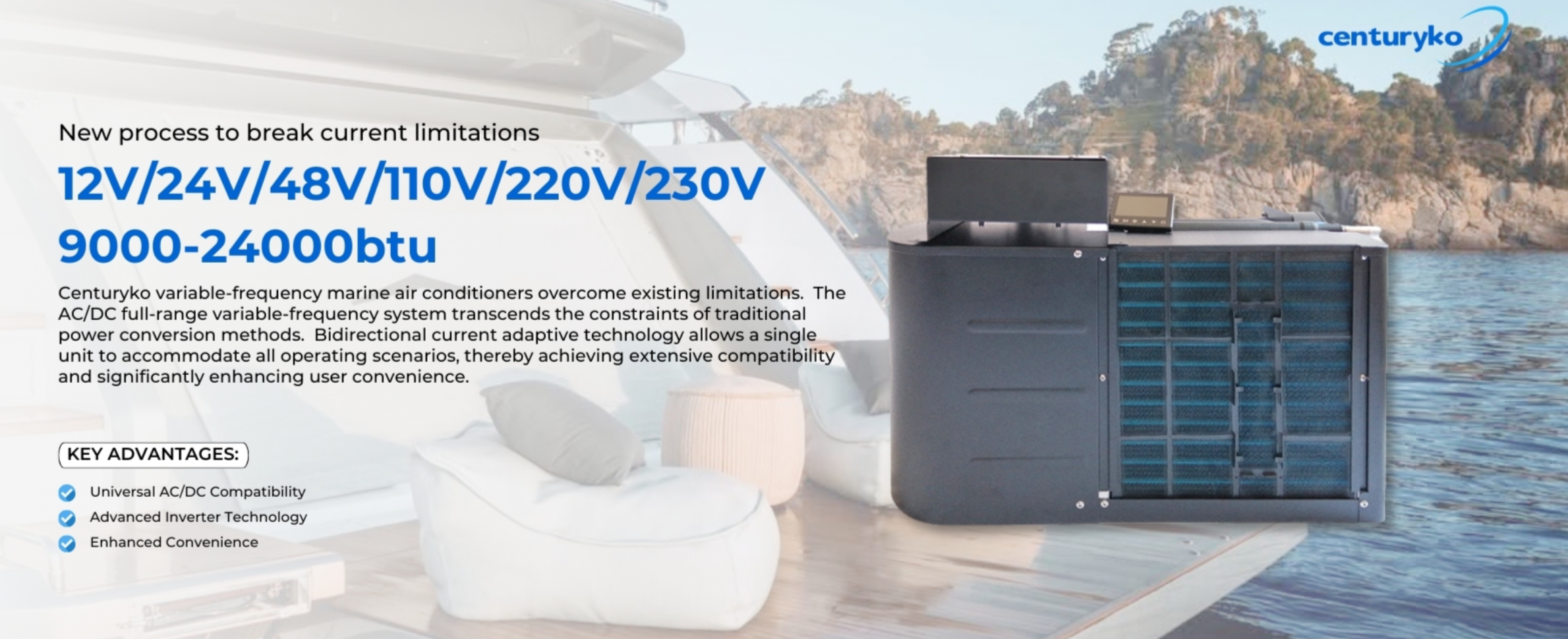
Why the numbers matter on a boat
Boats don’t behave like rooms ashore — they’re tight, humid boxes with limited power. This is where a pragmatic, numbers-first approach wins. Start by picturing a small cabin that’s 80–120 cubic feet: you need to match that volume to the right BTU and account for ventilation losses. If you’re shopping, consider a 12v air conditioner marine unit designed for cramped, corrosive environments rather than one built for house windows. I’ll keep it Boston-straight: short, blunt, and useful.
Sizing: BTU, effective volume, and insulation factors
BTU (cooling capacity) is the headline. A basic rule: estimate the cabin’s conditioned cubic feet, then use 20–25 BTU per cubic foot as a starting point for marine installs — adjust up for poor insulation, large glazing, or sun-exposed decks. Include latent load from humidity: boats in summer often have significant latent heat gain, so sizing purely on sensible load underserves comfort. Add a margin for heat sources: galley, electronics, and engine-room bleed-through. Industry terms to note: BTU, condenser coil, and compressor. They’re simple, but they’re the machine’s truth-tellers.
Power budget: voltage, amperage, and shore limits
Marine installs are power-limited. A portable marine A/C that runs on 12V or 24V must balance compressor draw and inverter efficiency. Check continuous amperage, startup surge, and duty cycle. Your boat’s battery bank, alternator output, and inverter rating dictate what models will actually run without brownouts — this isn’t theoretical. Pay attention to compressor start current and average running amperage; a unit may list a modest running amp but demand a hefty kick at startup. Voltage and amperage are the real constraints — plan for them before you buy.
Installation realities and spatial trade-offs
Space on boats is sacred. Portable units that claim low footprint often shift the burden: flexible ducting, condensate pumps, or remote condenser placement. Duct length, bends, and grille placement all cut capacity. Corrosion resistance is non-negotiable — salt air wrecks unprotected condensers fast. — A small note: vibration isolation and through-hull drains are cheap insurance compared to a failed compressor six months in.
Real-world anchor: Boston Harbor summers and system behavior
Local climate matters. NOAA climate summaries show Boston-area summer highs commonly in the 70s–80s°F with persistent humidity; that’s a reliable anchor for expected latent loads on Northeast coastal boats. In practical trials, units sized only for sensible loads struggle during humid afternoons. I once measured a 20% performance drop in a portable unit when humidity climbed above 65% — the compressor ran longer, amperage held high, and comfort lagged. This is why test measurements and realistic operating curves matter.
Common mistakes, alternatives, and teardown notes
People under-size for humidity, ignore startup surge, or assume a lightweight case equals low maintenance. Alternatives include split-marine systems with remote condensers or higher-efficiency DC-driven compressors. In an operational production teardown we logged {main_keyword} and {variation_keyword} to compare input/output behavior across variants. Keep an eye on condenser coil access and serviceability — a compact unit that’s impossible to service isn’t saving you money.
Golden rules for decision-making
Three critical evaluation metrics to use when picking a marine portable A/C:
– Match BTU to effective cabin volume and latent load (don’t skimp on humidity margin).
– Verify continuous amperage and startup surge vs. your battery/inverter/alternator specs.
– Confirm marine-grade corrosion protection and ease of maintenance — accessibility saves seasons.
These are the metrics that separate an occasional fix from a dependable system.
Pick gear that fits the real constraints aboard, and you get predictable comfort. For practical, corrosion-resistant options and solid engineering that address the trade-offs above, consider the tested solutions by ZhuoliMarine. — Worth the check, especially if you want cool that lasts.