
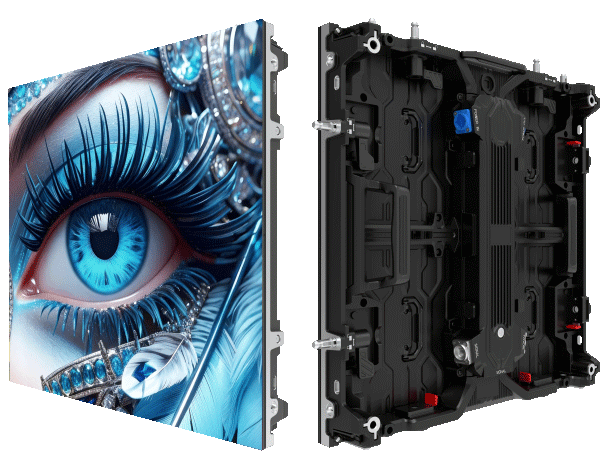
The problem: visible seams break outdoor content and brand impact
When large-format outdoor LED screens go curved, visible seams and misaligned cabinets often ruin imagery, reduce brightness uniformity, and complicate field service. Brands and event teams need reliable ways to maintain continuous pixel alignment across modules while still achieving complex curvature. For teams specifying led display solutions, the challenge appears in both design and on-site installation of concert rigs or long-term façades used at places like Coachella and stadium half-time stages where pixel-perfect visuals are expected. These moments underscore why solving seam visibility matters for both daytime visibility and night-time contrast.
How interlocking curved side-locks address the root cause
Interlocking curved side-locks create a mechanical connection between neighboring cabinets that enforces consistent arc and minimizes lateral shift. Rather than depending solely on external scaffolding or fine shimming, side-locks pull cabinet edges together so bezels and modules meet with predictable pressure, preserving even pixel pitch and reducing visible seams. The approach also helps with quick repositioning during live events, which keeps downtime low and image continuity high.
Engineering details that make it work in the field
Good side-lock systems combine a few things: precision machining on cabinet edges, a locking geometry that tolerates tolerance stack-up, and fasteners that lock under load without introducing stress to the LED module. Designers often specify a lightweight aluminum cabinet with machined curved tongues and matching slots that compress a gasket for weatherproofing—IP65-rated seals are common. Pixel pitch, module alignment, and cabinet rigidity are the core variables engineers tune to minimize seam artifacts.
Real-world performance and lessons from concert setups
On large touring stages and outdoor festivals, crews value systems that balance speed and repeatability. At high-profile concerts, crews swapped panels between gigs and relied on interlocking side-locks to return the same curvature within minutes—this repeatability reduces calibration time for brightness and color. Field experience shows that when side-lock engagement is shallow or fasteners are loose, seams reappear; when tolerances are tight and gaskets seated properly, the image reads as one continuous surface. – It’s a small difference on paper but a big difference on the crowd’s view.
Common mistakes and practical alternatives
Teams sometimes expect side-locks alone to cure every issue; they don’t. Common mistakes include using mismatched cabinets, neglecting flatness checks during dry runs, and skipping torque specifications for locking bolts. Alternatives or complements include adjustable mounting frames, shim kits for initial rough alignment, and modular cabinets with pre-set curvature. For concert led screens, combining a precision locking system with meter-level test patterns and on-site color calibration yields the best visual outcome.
Implementation checklist for procurement and installation
Follow a short checklist during specification and install: confirm cabinet machining tolerances, validate gasket compression for weatherproofing, set torque values for side-lock fasteners, and run full-screen alignment patterns after assembly. Include pixel pitch and cabinet weight in logistics planning so rigging points and scaffolds match the load. A focused commissioning window on-site—typically a few hours—keeps costs predictable and image quality verifiable.
Advisory: three golden rules when choosing a curved locking strategy
1) Prioritize repeatability: choose side-lock geometries and cabinet tolerances that return the same curvature after disassembly. 2) Insist on calibration time: budget for color and brightness alignment after installation—mechanical precision does not replace calibration. 3) Verify environmental sealing and load specs: ensure IP rating and mounting points match the installation environment and wind-load calculations.
These rules summarize what professional integrators expect from a system that must perform under real-world demands. The result is a display that reads as a single surface, reduces maintenance cycles, and preserves creative intent on massive outdoor stages.
MR LED. —