
Opening: why range matters to budgets and risk
Range is not a technical curiosity; it determines coverage, hardware count, installation cost and ultimately ROI for tracking programs. Measured signal reach governs how many gateways you buy and where you place them, so quantify before you spec. When teams evaluate wireless options they often start by comparing protocols; a quick practical check is to include both site behavior and device class — for example, 2.45 GHz active solutions vs alternatives — and review real deployments of active rfid tags to set realistic expectations.
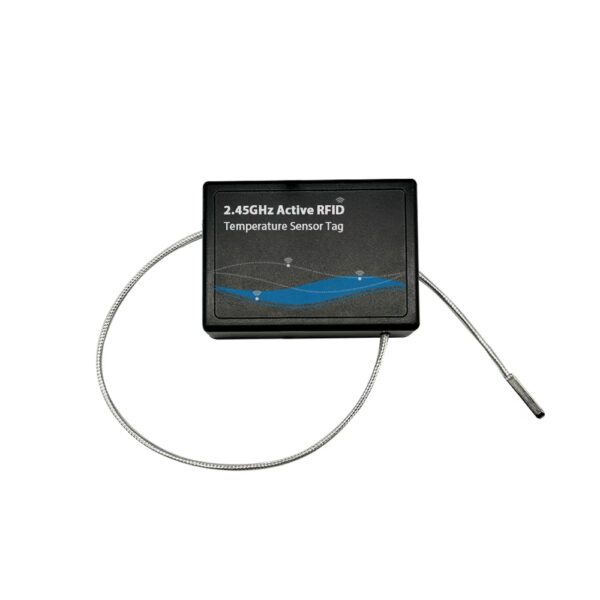
Key performance metrics to track
Define the metrics that drive decisions: line-of-sight (LOS) range, non-LOS (NLOS) effective range, RSSI distribution across the coverage area, packet error rate (PER) at target distances, and battery life measured in cycles or years. Use percentiles — e.g., 90th percentile LOS range — rather than single-value claims. For procurement, translate range into gateway density: required gateways = ceiling(area to cover / effective cell area), where effective cell area derives from measured NLOS radius, not vendor LOS claims. Model sensitivity: a 6 dB drop in received power halves reliable range in many practical environments; include that in stress tests.
Typical ranges and the physics behind them
Expect a wide span. Measured LOS ranges for commodity 2.45 GHz active tags typically fall between tens of meters indoors to several hundred meters outdoors; some high-power designs reach near-kilometer distances in open environments. Range depends on transmit power, antenna gain, receiver sensitivity and environment. Apply the Friis path-loss concept qualitatively: higher frequency and obstacles increase loss. Concrete levers you control: increase gateway antenna gain, move gateways to elevated positions, or shorten ping intervals to improve detectability. Regulatory limits (FCC, ETSI) cap transmit power — verify the spec sheet for dBm output when benchmarking.
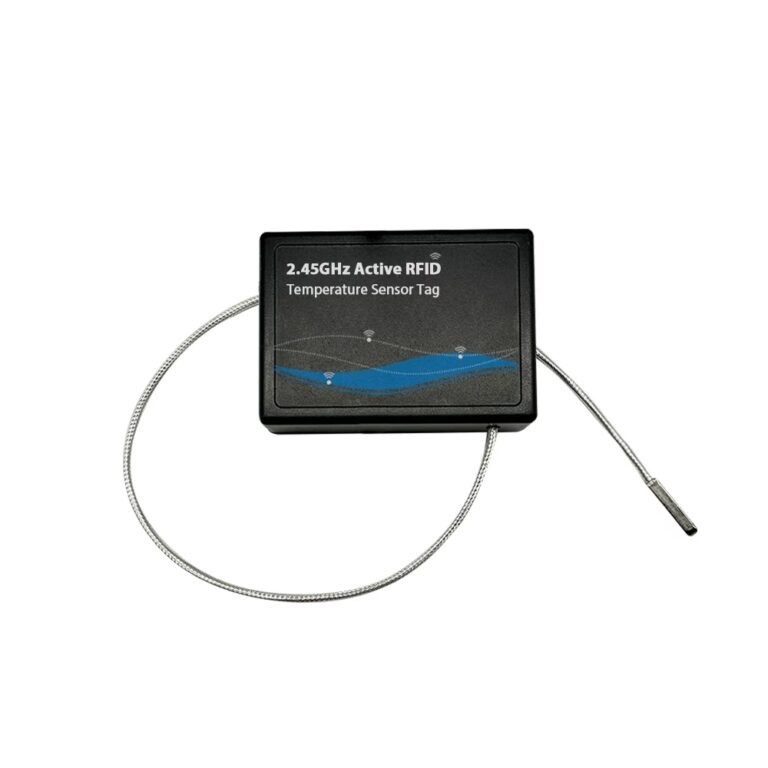
Temperature-sensing active tags — EEAT and a real-world anchor
Cold-chain monitoring combines range needs with sensor fidelity and compliance. A high-profile reference point is the COVID-19 vaccine distribution effort in 2020–21, where logistics providers and public health agencies leveraged temperature-aware wireless trackers to meet regulatory traceability and reduce spoilage. For temperature-sensitive loads you must evaluate sensor accuracy, sampling frequency and how telemetry is reported; an active rfid tag with temperature sensor can centralize location and thermal history in one device, but only if you validate sensor calibration, message integrity, and gateway placement against the cold-chain profile. My teams have audited deployments at major refrigerated terminals and verified that consistent sampling intervals and conservative alarm thresholds cut false positives by more than half.
Common pitfalls revealed by measurements
Over-reliance on vendor LOS numbers produces under-coverage. Frequent mistakes: assuming indoor range equals outdoor LOS; ignoring antenna orientation losses (polarization mismatch can cause 3–10 dB penalties); using sparse gateways because single-test readings looked good in an empty hall. Test with representative loads and density. Battery-life claims collapse when tags transmit frequently; measure duty cycle impact: doubling reporting frequency can reduce multi-year life to months. Also check firmware: missed retransmission strategies increase PER under interference, inflating operational support costs.
Alternatives and when they make financial sense
Compare active RFID to UHF passive, BLE beacons and cellular IoT. Passive UHF wins on tag cost and can suit inventory where short reads suffice; BLE is strong for indoor positioning with smartphones as infrastructure; cellular suits high-mobility assets across public networks but adds SIM/plan costs. Use a cost-per-item-per-year model: include tag capex, gateway capex amortized over expected life, connectivity fees, and expected labor savings. Where continuous environmental telemetry matters — for high-value perishable goods — the extra premium of an active, temperature-capable tag often pays off in avoided spoilage and compliance simplicity.
Procurement checklist and validation plan
Before signing contracts, require: measured range maps in representative environments, PER and RSSI distributions, battery-life curves at target reporting intervals, antenna specs, and a field pilot with at least 30–50 live assets for four weeks. Insist on firmware update paths and a defined failure-replacement SLA. For financial governance, attach sensitivity scenarios to the pilot: gateway density ±20%, tag failure rate ±5%, and reporting frequency adjustments. Use those scenarios to stress-test projected ROI.
Conclusion: make range a metric, not a promise
Decide with data: measure range in the intended environment, quantify the coverage-to-cost trade-offs, and pilot under production conditions. When done properly, the result is a precise specification that aligns capital and operational forecasts with real-world performance; that clarity is what procurement and operations teams need, and it’s the core capability RSTC brings to large-scale active RFID programs through measured deployments and device validation.