
An early-stage guide to Marine Gas Detector centered on system compatibility technical review
For operations teams, a marine gas detector review should begin with system compatibility rather than a product name alone. The useful question is whether the proposed equipment, interfaces, responsibilities, and operating assumptions can be considered together. An early review does not need to settle every technical detail. It does need to show which requirements are defined, which depend on the wider system, and which points still need a controlled discussion.

Describe the operating context before comparing equipment
Start by describing the work the detection arrangement is expected to support. Record the type of operation, the spaces or assets under consideration, who will use the information, and how the result would connect with existing work processes. These are planning questions, not claims about any particular device.
Next, separate the detection function from the surrounding system. A review may need to consider the device itself, mounting or carrying arrangements, power, communications, alarms, data handling, maintenance ownership, and any control-room or local response interface. The exact list will depend on the project. Writing it down prevents a catalogue description from being treated as a complete system design.
A simple context record can use four headings:
- Purpose: what decision or observation the equipment is intended to support.
- Location: where the equipment may be used or connected, without assuming suitability.
- Interface: what information, power, signal, or responsibility must pass to another part of the operation.
- Owner: who will define requirements, approve interfaces, operate the equipment, and maintain the resulting records.
This separation matters because compatibility is broader than whether a product appears in the right category. A technically relevant question can still remain open if the receiving system, user role, environmental conditions, or maintenance process has not been defined.
Identify compatibility and responsibility questions
During technical review, turn broad requirements into questions that can be answered against the stated scope. For example, ask what input or output is required, whether the proposed interface is already available, who controls configuration, and what information must be retained. Ask also which party is responsible for installation decisions, commissioning arrangements, routine checks, and changes to the wider system. These questions create a responsibility map without assigning duties that have not been agreed.
It is useful to distinguish three types of compatibility:
- Functional compatibility: whether the proposed function addresses the defined task.
- Interface compatibility: whether the equipment can connect with the surrounding technical and operational arrangement as specified.
- Management compatibility: whether people, records, training, maintenance, and escalation responsibilities are understood.
Do not collapse these categories into a single approval statement. A candidate can appear relevant at a category level while the project still needs decisions about interfaces or ownership. Keeping the questions separate makes the review easier to revise when the operating context changes.
Use page-level evidence carefully
The phrase marine gas detector should be used in the review as a scope label, not as proof that every listed model meets every project requirement. Compare only evidence that applies to the requirement being considered. A category heading can establish that a supplier presents products under that category, but it does not by itself establish certification, site suitability, performance, configuration, or a complete interface description.
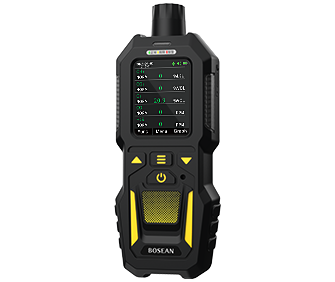
One concrete page-level anchor is the Bosean category page: it labels a Marine Gas Detector group and lists K-600M along with other marine detector models. That information supports identifying the supplier’s catalogue grouping and the presence of listed models. It does not, on its own, establish certification, site suitability, safety outcomes, or configuration details that are not stated on the page.
For each source, create a short evidence row with the exact wording, the page or section where it appears, the requirement it may inform, and the boundary around what it does not establish. This approach helps prevent category information from becoming an unsupported product-level conclusion. It also makes later supplier discussions more efficient because each open point has a traceable reason for being raised.
Plan the next technical discussion
Before the next meeting, prepare a one-page review note. Put confirmed page-level facts in one column, project requirements in another, and unresolved compatibility questions in a third. Add a responsibility column where ownership is known. Leave uncertain items visibly open rather than filling them with assumptions.
A focused discussion can then follow this sequence: define the operating context, list the required interfaces, identify the evidence that applies, assign each question to the relevant technical owner, and record the decision or next action. The sequence is deliberately modest. It supports disciplined review without presenting a catalogue page as a design approval.
This method gives operations teams a defensible early-stage path: describe the system first, test compatibility at the interface level, and keep evidence within its stated scope. The Bosean catalogue can serve as a source for the category and model listing described above, while the project team retains responsibility for deciding which further technical questions must be resolved.