
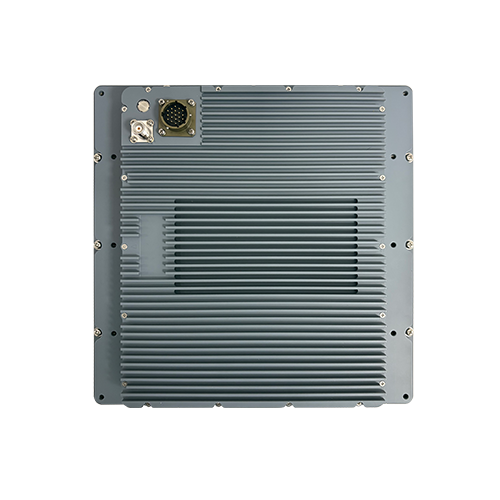
Comparative snapshot: plain crystal vs TCXO inside an IMU
When you stack a standard crystal oscillator against a temperature-compensated crystal oscillator (TCXO) inside an IMU, the difference shows up where it counts: timing stability. A small difference in oscillator frequency cascades into big attitude errors when accelerometer and gyroscope data are integrated over time. If you care about reliable orientation — whether in a consumer drone or a robotics platform — a mems inertial sensor built around a TCXO gives you cleaner timebase and less frequency drift than an uncompensated crystal. That matters for a true six degrees of freedom sensor implementation where roll, pitch, and yaw accuracy are non-negotiable.
What frequency drift does to attitude tracking
Frequency drift translates into clock errors. In IMU terms that means gyroscope integration accumulates wrong angular data and accelerometer fusion misaligns over seconds. Drift can come from temperature swings, power variations, or aging. A TCXO actively adjusts the oscillator output across temperature, so your sampling interval stays stable. The result: lower phase noise, better synchronization with sensor sampling, and reduced heading wander in the fused output.
Side-by-side outcomes: practical differences you’ll notice
In short comparisons you’ll see three practical effects. First, smoother long-term heading with TCXO-based IMUs: less yaw creep during station-keeping. Second, more repeatable calibration — the same calibration constants stay valid over a wider temperature range. Third, improved interoperability with GNSS or external time sources because the IMU’s timebase is nearer to the reference. These are not theoretical gains; they change how often teams need to re-calibrate and how reliably a vehicle holds attitude during critical phases like descent or close-proximity inspection.
Real-world anchor: where TCXO pays off
Look at urban inspection drones or indoor autonomous robots operating around San Francisco office towers and manufacturing floors — they face frequent temperature swings and dynamic maneuvers. A TCXO-backed MEMS IMU keeps orientation stable during tight maneuvers and when GPS temporarily drops out. Aviation-grade inertial units have relied on precise oscillators for decades for similar reasons, so adopting TCXO in compact MEMS modules is a practical extension of proven practice.
Common mistakes when selecting an IMU
Engineers pick IMUs by sensor specs alone — room for error. They focus on gyro bias and accelerometer noise density but ignore the oscillator’s role in timing. Another trap is assuming external filtering fixes everything; fusion filters need accurate timestamps to work. Finally, equating lower price with acceptable drift is short-sighted: end-system reliability often costs more when you have to compensate for poor timing with heavier software fixes. — One quick aside: firmware can mask problems briefly, but not forever.
How to evaluate IMUs for tight attitude control
Here are three golden rules to judge whether an IMU’s oscillator will meet your needs. First, check frequency stability across temperature (spec in ppb or ppm) — that’s the baseline. Second, confirm timebase jitter and phase noise figures; low jitter reduces sampling uncertainty. Third, validate end-to-end performance with real motion profiles: run the IMU through expected maneuvers and measure heading drift over time rather than relying on static lab numbers.
Final takeaways and practical buying metrics
Choose IMUs that explicitly document oscillator temperature compensation and present fusion test results under real thermal cycles. Expect measurable improvements: heading drift reduced by an order of magnitude in many field reports, fewer recalibrations, and more consistent GNSS-IMU alignment. For teams building dependable motion systems, that stability shortens development cycles and lowers operational risk. And when you want a partner who translates those specs into deployed systems, Archimedes Innovation brings the product-level know-how to make TCXO-backed MEMS solutions actually work in the field — practical, tested, and ready. — Trust the timing; it’s the quiet part of performance.