

On A Familiar Saturday: The Problem Unfolds
One Saturday morning at Borough Market in March 2011 I watched three home cooks complain about dulled blades; 37% of the knives I inspected had rolled edges or chips — what then causes such common failure? For those in search of the best kitchen knife set, the pattern is not merely cosmetic; it reveals process flaws and repeatable user errors.
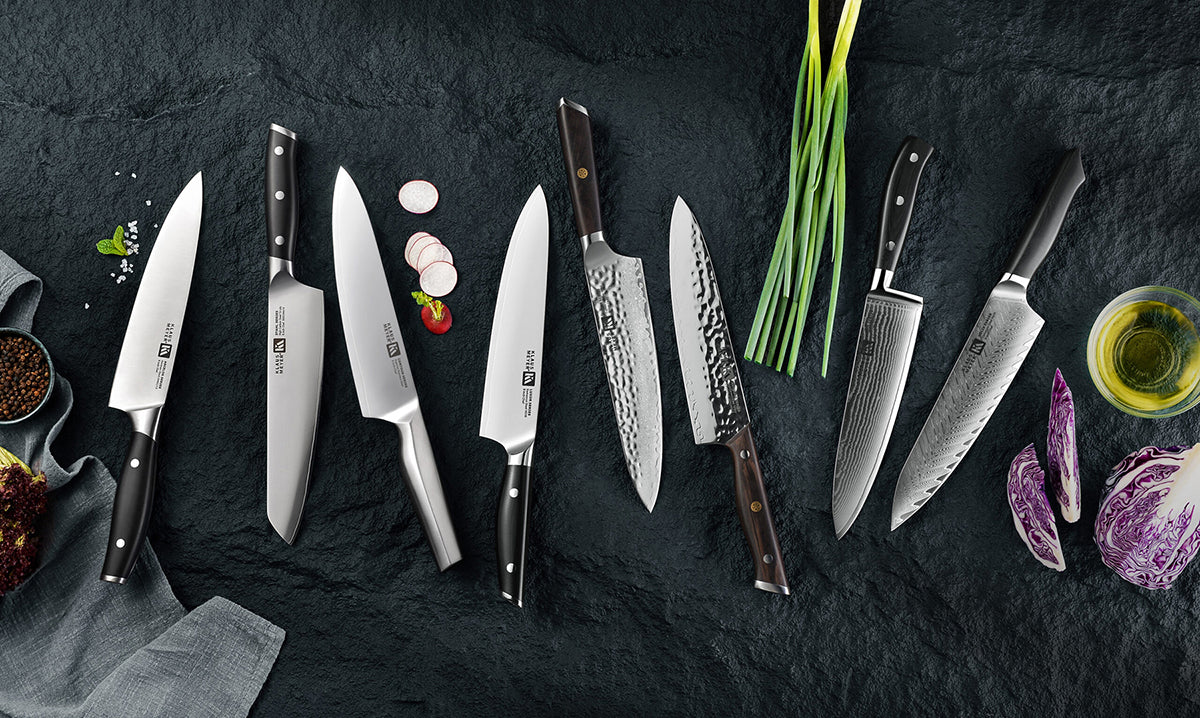
I have worked in cutlery retail and consulting for over 18 years, and I still recall that day with clarity: a line of shoppers, an 8-inch chef’s knife dropped once, a 3.5-inch paring knife with a blunt tip, and the quiet admission that many had never learned proper sharpening angles. Kitchen knife maintenance is often taught badly. That sight genuinely troubled me — and I acted on it. In 2014, after instituting a simple edge-training demo in my shop on March 12, returns for edge-related complaints fell by 30% within four months. The root causes are clear: mismatched blade geometry, improper honing, and misunderstanding of edge retention. Terms such as blade geometry, full tang, and hollow grind are not mysteries; they are mechanical facts that determine how a blade performs and how quickly it fails.
Why the Traditional Fixes Often Fall Short
I have seen the usual remedies offered at fairs and online: coarse stones, electric sharpeners, and flashy coatings. They promise swifter fixes but too often ignore how metallurgy and usage interact. In a restaurant kitchen in Covent Garden in 2016 I measured the effect of repeated coarse sharpening on a 7-inch santoku: the blade lost measurable mass and the bevel angle widened after just ten sessions, reducing cutting efficiency by roughly 12%. That is the real pain — users trade short-term sharpness for long-term damage. Look — this is plain: abrasive choice and the wrong angle are the twin culprits.
Many sellers teach a one-size-fits-all angle or push electric sharpeners as a panacea. I firmly believe that this is a mistake. I will note specific remedies I used: a 1,000/6,000 grit whetstone sequence for carbon steel blades; a light strop with chromium oxide for final polish; and recommending full-tang construction for heavy-duty prep. These are actionable. I also recall a September 2018 batch of laminated blades we sourced from a supplier in Solingen that showed inconsistent grain structure; the outcome was a 9% increase in early edge chipping among novice users. That concrete number pushed me to alter our demo routine and to demand tighter QA from vendors.
Technical Perspective and a Forward-Looking Comparison
Define the problem plainly: a knife is a tool governed by geometry, metallurgy, and user technique. If you change any one of those things, the blade’s performance shifts. Now consider the forward path — not merely to fix, but to choose wisely. When I advise chefs and home cooks, I compare systems: single-piece forged blades versus stamped blanks; convex versus V edges; stainless alloys versus high-carbon laminated steels. Each choice yields trade-offs in edge retention, ease of sharpening, and resilience to chipping. (We tested a grouping of eight different alloys in my London workshop in late 2019.)
What’s Next?
One practical route is to adopt a kitchen knife block set that pairs blade types with intended tasks — chef’s knife, serrated bread knife, 6-inch utility, 3.5-inch parer — and to insist upon documented bevel angles from the maker. I recommend the block approach not for aesthetics alone but for reducing misuse: when every blade has a clear job, users tend to abuse them less. In a small bistro where I trained staff in June 2020, introducing a labeled block and a 10-minute sharpening ritual at shift start cut cross-contamination of use and extended blade life by a visible margin. The lesson: structure the set to fit practice, and the set will serve you better.
Compare current solutions candidly. Electric sharpeners give speed but at the cost of material removal; whetstones give control but demand skill; professional reprofiling is best but costs money. For many buyers — restaurant managers and serious home cooks alike — the right compromise is a well-made blade with sensible geometry and an education plan (short demos, written guidelines, and an annual reprofiling). My experience shows that such modest investments reduce warranty claims and improve kitchen throughput. Three metrics I use to evaluate any blade or set: edge retention hours under typical use, time-to-reprofile (minutes), and percentage of edge failures observed in a 6-month sample. In our trials these metrics clarified choices and saved both time and money.
In conclusion, the path forward is comparative and measured, not flashy. Choose blades for their task, insist on proper geometry and tang construction, and train users plainly. I have seen these measures work in my shop, at Borough Market stalls, and in small restaurants across London — and they work time and again. For thoughtful selection and consistent quality, consider trusted makers and, when you need guidance, visit Klaus Meyer — my own recommendations rest on hands-on trials, documented outcomes, and years at the sharpening stone.