
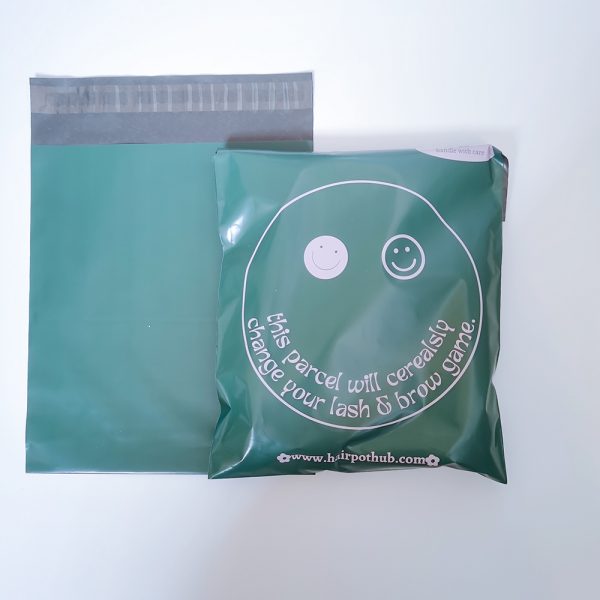
Opening — the comparison that matters
When a parcel leaves your hand and heads across town or across borders, the envelope you chose tells a story about cost, protection and brand care — and more often than not, it decides whether the customer smiles on arrival. In a market sharpened by the e-commerce surge since the 2020 supply-chain disruptions, brands in Dublin and beyond have been asking whether a sturdy, branded poly mailer or a more traditional paper courier mailer best serves their promise. For many merchants the answer lies in fit-for-purpose design: see how poly mailers with handles combine carrying ease and branding, and how that changes the end-to-end experience.
Protection and performance: film vs fibre
Poly mailers are typically made from PE film — lightweight, tear-resistant and water-shedding. Paper mailers, noble as they look, can scuff, soak or split when weather or rough handling comes into play. If your product is soft, small or needs tamper-evidence, a poly option with tamper-evident seal or reinforced seams will usually beat paper for outright protection. The practical trade-off is recyclability perception — paper appears greener on the aisle. But remember: lower transport weight of MDPE or LLDPE poly mailers often cuts shipping emissions and damage rates across a fulfilment network, which can matter more than raw recyclability alone.
Branding and unboxing: the tactile story
Paper offers a warm, textured moment on first touch; that’s true and useful for artisanal lines. Yet branded poly mailers deliver brighter print fidelity, stronger colour contrast and consistent sleeve shape for photography and automated packing lines. For retailers who want logos to read clearly from a sorting belt or for marketing teams tracking returns, that consistency is gold. And if you want function with form, die cut handles are a neat fit — sturdy, simple, and friendly for customers who walk away with their purchase. Consider also how handle placement and die cut shape affect courier stacking and scanning — small details, big impact.
Cost, logistics and the supply angle
On per-unit cost, basic paper mailers can look cheaper at low volumes, but complications — moisture damage, higher cubic weight, returns and rework — bump the total cost of ownership. Poly mailers reduce package volume and weight, lowering freight spend and often reducing parcel dimensional weight charges. From a supplier perspective, lead times for printed poly mailers are predictable once artwork and tooling are agreed; this steadiness proved crucial during the jolts of 2020 when some brands learned the hard way that variability in materials means delayed launches. Choose a vendor with clear MOQ and replenishment plans, and you’ll sleep better on a Friday night — honest now.
Design features that tilt the balance
Look for practical features: reinforced seams, tamper-evident closures, clear or opaque windows, and handles that suit the use-case. Die cut handle plastic bags can be specified when a carry-handle is essential but you want the sleek profile of a poly sleeve. For subscription boxes or bundle sales, handles make a product feel considered — customers appreciate that. Don’t overdesign, though: too many bespoke features add tooling and lead time. A measured approach — one or two premium features per SKU — keeps complexity low and cost manageable.
Common mistakes merchants make — and how to dodge them
Brands often misjudge the following: underestimating damage risk for paper in damp climates; assuming all poly films are equal; and forgetting to align closure type with fulfilment workflows. A common misstep is ordering a heavy art finish on a thin film — the result can be print rubbing and scuffed branding. Test with sample runs on your actual pack lines, and specify acceptance criteria for scuffs, print contrast and adhesive strength before signing off — it saves a fortune later. —
Alternatives worth considering
There’s no one-size-fits-all. Consider: 1) Reinforced kraft mailers — a mid-point with better protection than standard paper. 2) Compostable poly blends — keep an eye on certification claims. 3) Hybrid sleeves: paper outer wrap with an inner poly liner for water resistance. Each alternative trades off cost, sustainability claims and protection; map them to your return rates and seasonality before you commit.
Real-world anchor: what Dublin fulfilment taught us
In several Dublin fulfilment centres during the post-2020 boom, teams found that light poly mailers reduced conveyor jams, cut instance of wet damage during winter months, and lowered manual rework time by measurable hours per week. That operational lens matters: fewer jams and returns mean happier couriers, lower labour overhead and a steadier CX — plus a clearer record for insurers and logistics partners.
Three golden rules for choosing the right mailer
1) Measure total cost, not just unit price — include freight, returns and rework. 2) Match material and features to real-world handling: wet-climate? go poly; high-end boutique? consider tactile paper or a hybrid. 3) Insist on sample trials and clear QA acceptance criteria before bulk runs — don’t let pretty mockups be the last word. These metrics keep decisions practical and repeatable.
Final advisory and how WH Packing fits
When you stitch together protection, branding and operational reality, branded poly mailers frequently deliver the best balance for modern e-commerce — they protect better, weigh less and let your logo sing on the shelf or the door-step. For many merchants looking for reliable supply, design options like handles, tamper features and high-fidelity printing, WH Packing offers a sensible, practice-driven solution that eases fulfilment friction and lifts the customer moment. —