
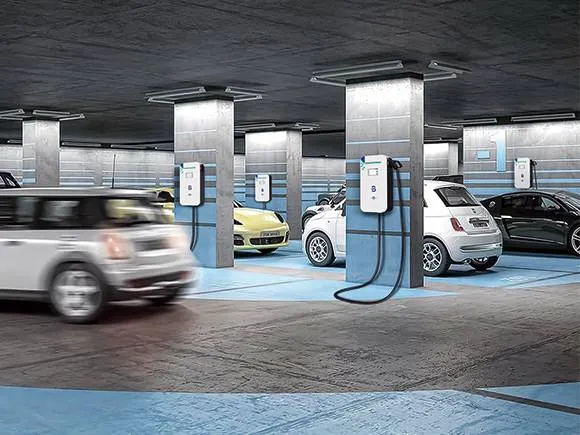
Setting the Scene: Why Benchmarking Beats Guesswork
A rush hits the garage at 6:30 p.m., and six EVs stack into a short queue. In commercial EV charging stations, a 30-second delay repeats all night and becomes a line. Peak utilization jumps 3x between 4–8 p.m.; session drop rates hover near 6–10% in many sites; “98% uptime” often hides a 10–12% port-to-port variance. That gap is where drivers lose trust (and where revenue slips). Now the real question: which change moves the needle first? Power? Software? Or simple queuing flow? The answer is not a guess—it is a pattern. Look at per-port throughput, session success paths, and the small switches that slow everything down. Then match fixes to the busiest hour, not the average day. Direct, clean, and testable—because nothing beats proof on the lot.

This is the mechanic view: observe, measure, and adjust. Small wins compound, especially under load. If the site can pass the stress test, it will cruise through the rest. Let’s break it down and set up a fair comparison for the next move.
Under the Hood: Where Traditional Fixes Fall Short
Where do sessions really fail?
Teams often start with hardware speed and sticker price. With commercial EV charger solutions, the smarter start is the failure path: tap, authenticate, ramp, deliver, exit. Most gaps hide in the handoff between systems. OCPP 2.0.1 events, load balancing logic, and edge computing nodes decide if a line clears or stalls. When power converters derate at heat or firmware retries pile up, time slips. Look, it’s simpler than you think: the fastest site is the one that wastes the fewest seconds per step—funny how that works, right? Map each step, measure dwell, and you will see the clog.
Hidden pain shows up at the curb, not the console. Cables miss reach. Payments lag on roaming. Tariffs trigger demand charges at the worst minute. Static schedules overfeed empty bays while busy rows starve. Fault codes loop before support sees them. Even a clean site can fail if queue logic is blind. ISO 15118 Plug&Charge helps, but only if tokenization latency is low. Firmware over-the-air must stage and roll back without killing live ports. And the energy management system needs real-time amps, not 5-minute averages. When these basics slip, drivers blame the “charger,” but the fix is often orchestration.

Next-Gen Principles: Compare What Matters, Not What Shines
What’s Next
The forward path is principle-driven and test-heavy. Modern commercial EV charging solutions favor dynamic control over static power. Think adaptive load shaping tied to an EMS, with per-port limits that flex under heat and crowd. Keep local fallback alive so sessions continue if the cloud blinks. Use edge computing nodes to cache pricing, roaming tokens, and queue state. Watch anomaly scores on power converters to catch early drift. Push staged FOTA updates in off-peak windows. Prefer open protocols—OCPP and OCPI—so data flows both ways and audits are simple. This is not flash; it is control. And yes, drivers feel it—fewer taps, faster ramps, smoother exits.
Here is a clean way to choose—advisory, not hype. Use three metrics: 1) Time-to-first-charge at peak, measured from plug-in to stable current; 2) Session success rate at peak hour, including roaming and refunds; 3) Cost per delivered kWh, net of demand charges and curtailment. If a vendor improves all three in a 30-day pilot, keep going. If not, change the plan. Summing up: start with the failure path, design for peaks, and let data drive small but sharp fixes—because small cuts beat big promises. Field teams need tools that work under noise and heat, not in slides. That’s the professional way forward, and the bar keeps rising—funny how the simple rules win. For deeper playbooks and open, testable methods, see EVB.