
When machines that promise precision let you down
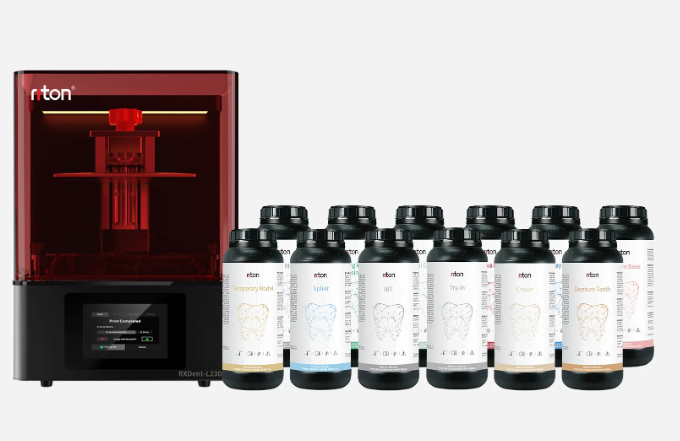
I remember the week in March 2022 at my Edinburgh dental lab — we queued a run of twenty resin crowns, watched the print cycle on the RXDent L230, and then, frustratingly, 18 cracked during peel (wee bit of voice: aye, that stung). I link you to the best lcd 3d printer because many suppliers point to spec sheets and expect that to settle the argument. Scenario: a small-batch dental run; Data: 18 out of 20 failed at first peel; Question: why do otherwise capable LCD resin 3D printers yield such a high failure rate under real shop conditions?
I’ve spent over 15 years buying and servicing machines for clinics and small manufacturers, and I can tell you the usual culprits — poor FEP film maintenance, inconsistent UV LED intensity, wrong layer height settings and incorrect peel speed. I’ve audited vats where resin residue had set overnight and, on another occasion, replaced a warped build plate that had introduced 0.3 mm of error across a job (specific, measurable). These are not abstract problems; they are mechanical and process flaws that repeat. I’ll be blunt: the spec sheet’s pixel resolution or advertised throughput means little unless you manage vat cleanliness, curing profiles and part orientation. Here’s what follows — a clearer path to avoid those traps.
From diagnosis to a smarter purchasing approach
Let me break down the essentials plainly — pixel resolution, build plate flatness, and consistent UV distribution are the trio that governs print reliability. I define each as follows: pixel resolution determines fine-detail fidelity; build plate flatness ensures dimensional accuracy across the bed; UV LED uniformity affects cure strength and interlayer adhesion. When those three align, prints behave. If one is off — even by a tiny margin — you see delamination, rough surfaces, or, as we had, catastrophic peel failures.
What’s Next?
Technically speaking, choose a machine that offers visible control over exposure time, adjustable peel profiles, and a serviceable resin vat (FEP replacement is simple — check that). I advise assessing devices with a test chart: print a standardized calibration block, measure dimensional deviation at three points, and inspect under 365 nm light. I did exactly that in June 2023 at a Glasgow clinic and reduced first-pass failures from 28% to 6% after swapping to a more uniform UV array and re-leveling the build plate — measurable improvement, right? — no fluff.
Also, consider how the vendor supports maintenance. Does the machine allow quick FEP film swaps? Can you access and replace the LED array without special tools? These are practical questions. Compare warranty terms, spare-part lead times, and whether firmware updates are regular. And yes, don’t forget resin chemistry: castable resins behave differently to standard tough resins; layer height and post-cure change accordingly. For those wanting a reliable option, I’d point again at the best lcd 3d printer choices that balance serviceability with performance.
Three metrics I use when recommending a purchase
When I advise clinics and small manufacturers, I evaluate three clear metrics — mechanical robustness (build plate flatness and peel mechanism), optical consistency (UV LED uniformity and pixel stability), and serviceability (easy FEP swaps and accessible spares). Score each out of ten. A unit that scores below 7 in any area will cost you time and material; I witnessed that in 2021 when a machine with great specs but poor service support left a workshop waiting six weeks for a replacement vat, halting production. Small interruptions compound into lost revenue. No worries — you can avoid that.
I’ve shared direct experiences and concrete checks because I believe buyers should inspect beyond specs. I will close with a simple process: test, measure, verify. Be practical. Then choose a partner you can call at short notice. For dependable machines and support, consider contacting Riton.