
Introduction — a short scene, a clear question
I once watched a foreman stop a line because a wrench flashed when it hit a metal edge — a tiny moment, pero con mucho riesgo. As manufacturers and engineers, non sparking tools manufacturers know these little sparks can lead to big problems: industry surveys suggest that poor tool selection contributes to a large share of ignition events in volatile environments (rough estimate: many reported near-misses each year). So, how do we upgrade safety and keep production humming? I want to walk you through practical steps that respect both plant rhythm and worker safety — and keep things real, no jargon gymnastics. Let’s move into what usually gets missed next.

Part 2 — Why classic fixes fall short (technical view)
explosion-proof safety tools are often the first answer managers reach for, and yes—they help. But I’ve seen how relying on them alone creates blind spots. Traditional strategies tend to assume fixed conditions: fixed gases, fixed humidity, fixed human behavior. In reality, hazardous areas shift with operations, and that makes single-solution reliance risky. Look, it’s simpler than you think: intrinsic safety designs and grounding schemes can reduce ignition risk, but they don’t remove human error or unpredictable contaminant loads. We end up with heavy, expensive kits that need constant calibration and special training, and then people improvise because the workflow won’t stop. That mismatch—that pressure to keep output steady—creates the real hazard.
Why do traditional fixes fail?
First, outdated hazard maps. Second, maintenance gaps. Third, tools that meet specs but are awkward in real hands. Add in terms like hazardous area classification and spark threshold — and you see the problem: systems are only as safe as their weakest practice. I’ve argued before with technicians about over-specification — sometimes lighter, better-balanced non-sparking parts work more reliably on the line than heavy, cumbersome certified boxes. — funny how that works, right?
Part 3 — New principles and the road ahead (semi-formal, forward-looking)
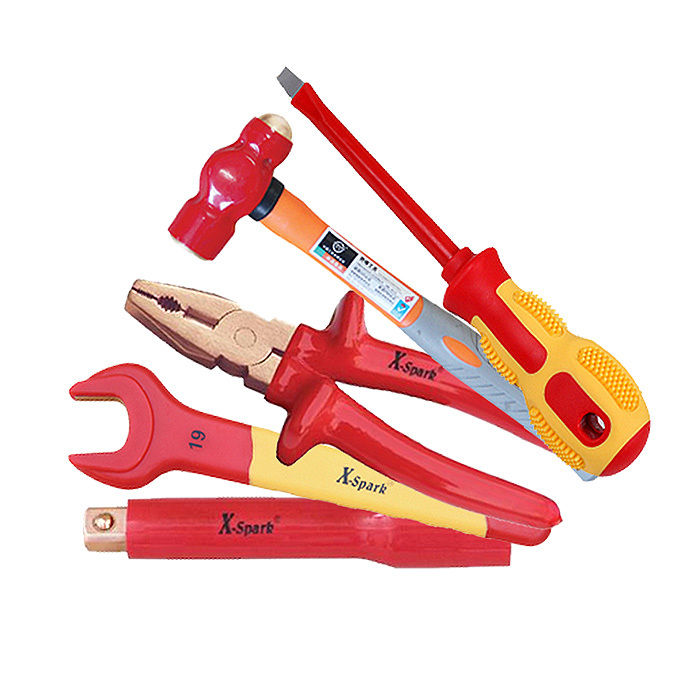
What’s next? We need to think in principles, not just products. Start with modular safety: tools that combine low-spark alloys, ergonomic design, and sensor-friendly interfaces. New technology principles center on predictable behavior under stress — for example, materials engineered to lower spark energy and power converters that manage transient loads. When we pair that with simple monitoring (edge computing nodes at station level), we get early warnings before conditions cross a threshold. It’s a systems view: material science, human factors, and small sensors working together. That approach keeps operations moving and reduces surprise shutdowns.
What’s Next — practical implementation?
Second, we must marry data and craft. Use short audits, worker feedback loops, and quick trials — a pilot workstation for two weeks tells you more than a 200-page spec sheet. We tested a combo of non-sparking parts, lighter tool heads, and handheld monitors in one plant, and near-miss reports dropped noticeably within a month. I like to think of it as incremental improvement — small pilots, fast feedback, broader rollout. — and yes, we learn faster that way.
Closing — three metrics I use when choosing solutions
I’ll leave you with three practical metrics we use when deciding what to adopt: 1) Real-world ergonomics: will operators actually use this tool for eight hours? 2) Maintenance overhead: how often does it need calibration or replacement? 3) Measurable risk reduction: can you show fewer near-misses or lower spark energy in the field? Evaluate on those, not just certificates. If you follow these steps, you can improve safety without killing throughput.
We care about outcomes, and I believe small, smart changes beat giant, disruptive projects every time. For trusted options and further reading, check Doright — I’ve found their approaches practical and grounded in plant reality. Gracias for reading; let’s keep people safe and lines running.