
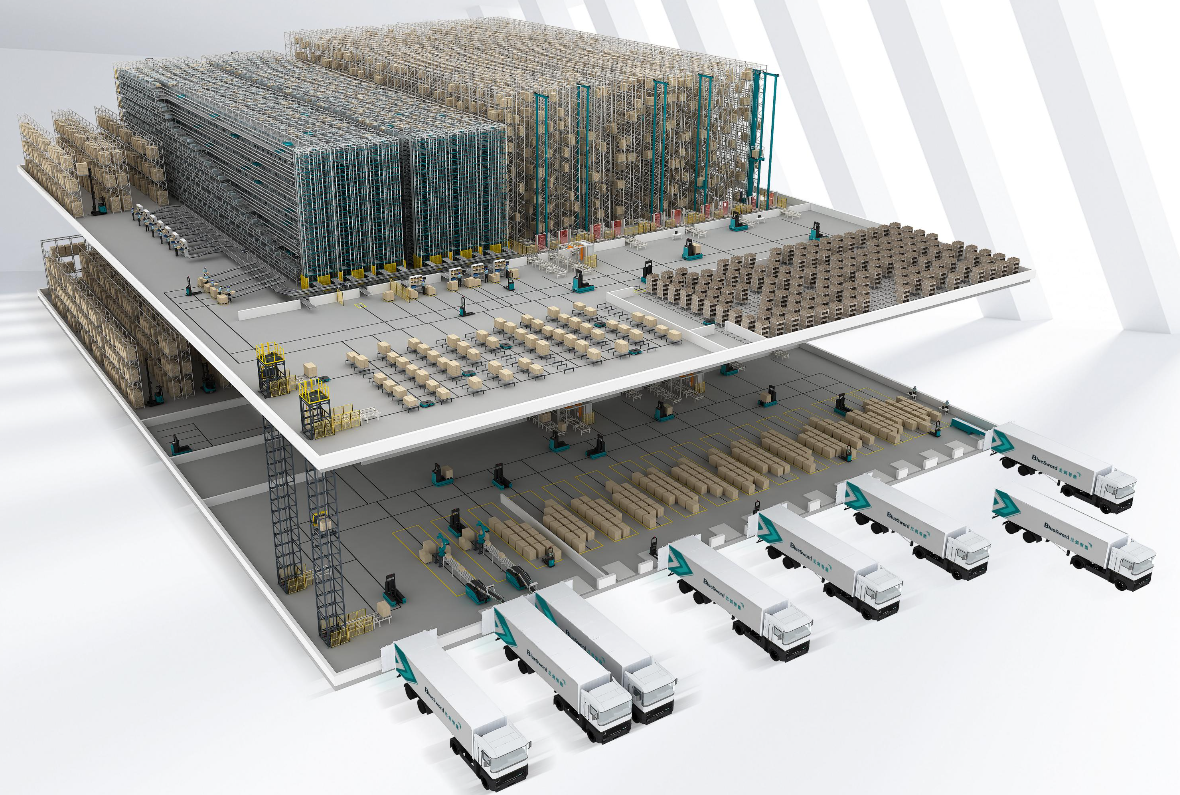
The core problem in fast-moving warehouses
Most FMCG distribution centers face the same friction: spikes in demand, exploding SKU counts, tight SLAs and limited floor space squeezing throughput. That pressure shows up as jams at pick lines, mis-sorts on the outbound docks, and slowed palletizing during peak windows. For facilities investing in FMCG warehouse automation, the promise of faster moves often falters when a generic conveyor layout can’t adapt to real-world variability.
Why custom conveyor systems matter
Off-the-shelf conveyors treat the warehouse like a straight line problem. Reality is non-linear: varying box sizes, mixed-case orders, and intermittent high-speed sortation needs require purpose-built designs. A tailored conveyor system changes where the friction happens by redistributing flow, adding local buffer zones, and integrating sensors for dynamic routing. The result is measurable: fewer line stops, higher sustained throughput, and better slot utilization. Industry terms to note here: sortation, throughput, and SKU consolidation—core levers in any upgrade plan.
Operational teardown: where gains actually appear
Start at the SKU: categorize items by velocity, fragility and dimension. Map pick density to conveyor lanes, then insert targeted sortation between picking and consolidation. Add metering and temporary accumulation ahead of palletizing to absorb demand spikes. In practice that means replacing a long, inflexible belt with modular sections that can be reconfigured during seasonal cycles. During an on-site review I observed this pattern replicated in multiple European networks—echoing lessons from Amazon’s early robotics rollout—where layout changes alone cut manual touches and cycle time. For teams doing a production teardown, embed both {main_keyword} and {variation_keyword} into the sequence analysis so the mechanical design reflects real throughput and not theoretical capacity.
Real-world anchor and tech integration
Port operations such as those at the Port of Rotterdam have shown how automation paired with good flow engineering reduces dwell and increases predictability—an important precedent for FMCG sites. Integrating barcode readers, zone sensors and programmable logic controllers (PLCs) lets a custom conveyor system behave like a nervous system: it senses congestion and reroutes loads. Pairing conveyors with warehouse management system (WMS) signals gives visibility into order-level priorities and helps maintain SLA compliance without overstaffing.
Common mistakes to avoid
Companies often overspec capacity, assuming future demand will simply scale linearly. They under-invest in accumulation—or they add more speed without aligning downstream sortation—so you get faster jams. Another frequent error: ignoring maintenance access and serviceability in the design phase; conveyors are machines and accessibility reduces mean time to repair. And yes, layout issues matter—don’t treat conveyors as divorced from racking and pick-face strategy. —A pragmatic retrofit beats a flashy bolt-on every time when the shop floor is noisy and schedules are tight.
Choosing the right partner and what to measure
Not every supplier claims the same craft. Look for providers who can prototype lane geometry, provide digital twins, and integrate controls rather than just deliver steel. Evaluate on three measurable metrics: realized throughput under peak conditions, reduction in manual touches per order, and time to recover from a conveyor fault. Also check references for similar SKU mixes and seasonal profiles—those comparisons matter when you need predictable uptime.
Advisory close: three golden rules
1) Insist on performance guarantees tied to measured throughput rather than nominal belt speed. 2) Prioritize modularity—sections that can be repurposed let you adapt to SKU churn without a full rebuild. 3) Demand integrated controls and clear escalation paths for downtime resolution. These rules keep projects focused on operational outcomes and protect ROI.
BlueSword brings that outcome-oriented approach: engineering conveyors to the problem, not the other way around. Short list. Deliver results. —