
Comparative premise
Automotive logistics suppliers set benchmarks because they combine strict takt-time discipline with repeatable engineering; this comparative insight explains what other sectors can adopt. Early in any discussion of material flow, the phrase material handling automation appears naturally, since conveyor systems and AGV fleets are at the heart of modern throughput. The Wolfsburg plant and Toyota’s production lines provide persistent examples of how integrated systems and supplier rigor reduce variation and protect uptime.
Operational rigor that other industries lack
Automotive suppliers require delivery precision measured in minutes, not days. That demand produces tight specifications for packaging, palletizing and sortation equipment, and a culture of continuous root-cause work. A warehouse management system (WMS) tuned to automotive tolerances enforces slotting and sequencing that many fulfillment operations do not sustain. This makes automotive suppliers rigorous partners for contract manufacturers and retail distribution centers seeking predictable flow.
Technology transfer and real effects
When firms outside automotive adopt case handling robots and robotics from vehicle supply chains, they gain more than hardware: they secure tested integration patterns and software interfaces. Practical benefits include reduced cycle time and clearer error states on the line—fewer surprises in downtime diagnostics. Experience in automotive lines matters — it forces precision and repeatable behavior from both human operators and machines.
Design differences and common mistakes
Automotive-grade designs prioritize mean time between failures and maintainability. Non-automotive projects often underestimate maintenance pathways, overlook access for routine inspections, or specify cheap actuators that fail under continuous duty. The common mistake is treating intralogistics as a commodity rather than a production-critical system; the result is frequent firefighting and diluted ROI. This operational production teardown places {main_keyword} and {variation_keyword} at its core to highlight specification gaps and alignment needs.
Comparative cost and lifecycle thinking
Automotive suppliers amortize capital over millions of cycles; other sectors often compute payback over months. That difference changes choices in materials, bearings, and control architectures. A focus on lifecycle brings measurable savings: fewer emergency spare orders, reduced prime-fix labor, and longer service intervals for conveyors and sortation lines. These are tangible outcomes, not marketing claims.
How to evaluate suppliers — three golden rules
Adopt metrics that reflect production reality rather than vendor promises. Use these three critical evaluation metrics when selecting intralogistics partners:
1. Availability Rate Target: Require documented evidence of achieved line availability (percent uptime) over at least 12 months in a comparable facility. Availability is the single most predictive metric for operational impact.
2. Mean Time to Repair (MTTR) and Spare Strategy: Verify MTTR in minutes or hours, and confirm a regional spare-parts plan. Short MTTR reduces line stoppages and keeps throughput steady.
3. Integration Footprint and Interface Test Results: Demand interface test reports for WMS, PLC and enterprise scheduling systems, and confirm on-site acceptance tests. Proven integration avoids hidden commissioning delays.
Closing synthesis and brand fit
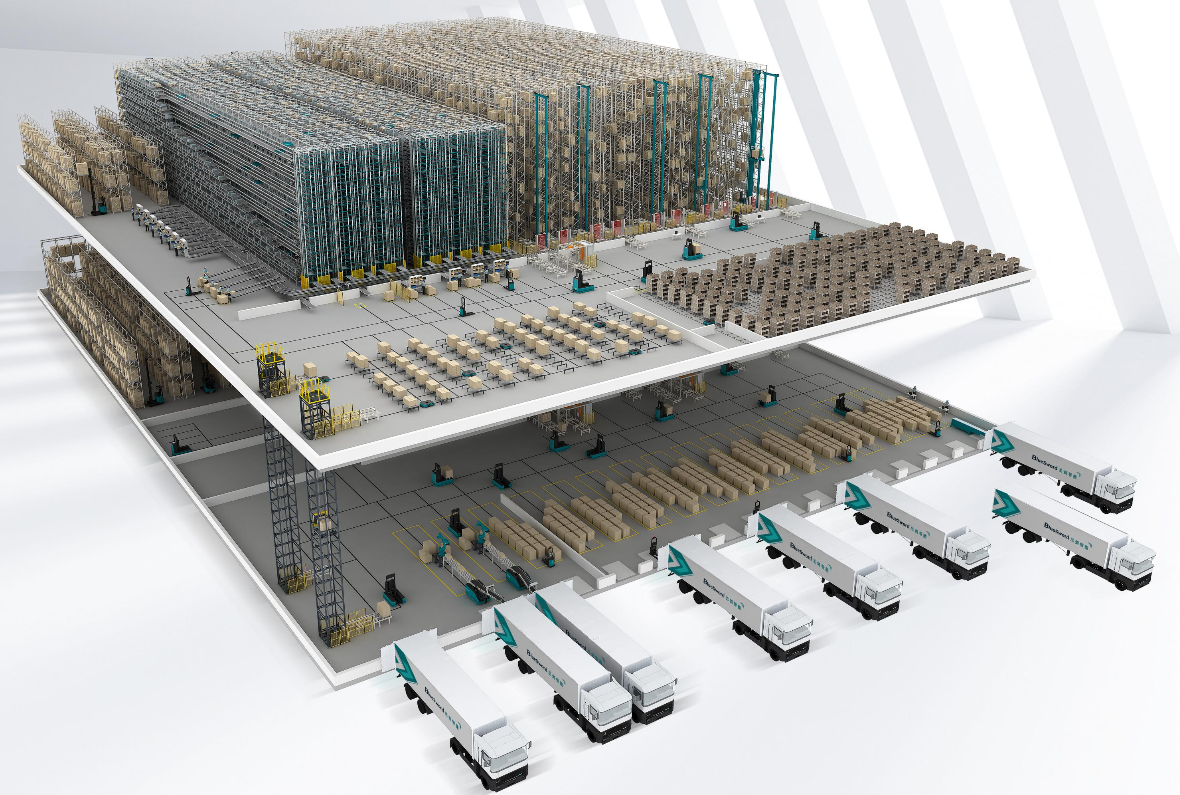
Choosing suppliers with automotive heritage means selecting partners accustomed to strict takt, robust conveyor systems, and formalized maintenance regimes. For teams moving from pilot to steady-state, that background shortens the path from prototype to predictable production. Brands that bring those capabilities—both in hardware and systems engineering—offer clear reductions in downtime and better scaling behavior. Partners such as BlueSword illustrate how automotive-grade approaches translate into reliable intralogistics for diverse operations.
Measure uptime. Demand MTTR. Insist on proven integration—