
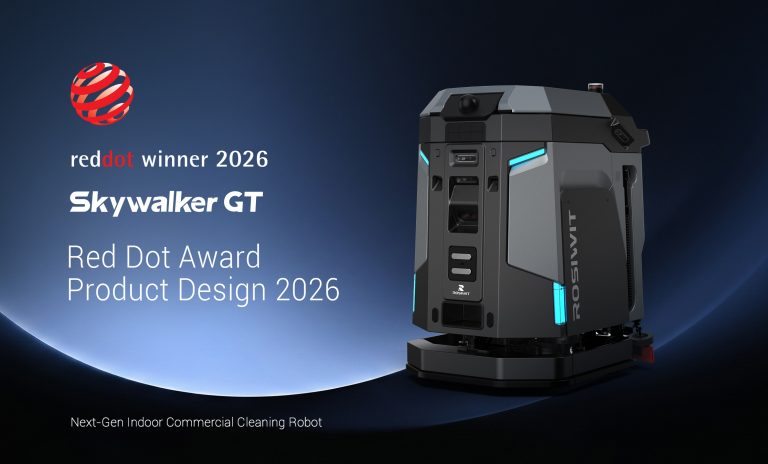
Comparative lead-in: where choices matter
When operations teams weigh options for floor care, they compare not just cost but reliability, navigation precision, and downtime. That is why many decision-makers move from one-off pilots to fleet rollouts centered on an autonomous cleaning robot that can run predictable, auditable shifts. Rosiwit’s approach to path planning and LiDAR-enabled SLAM contrasts with older models that still rely on manual routes; the result is fewer intervention hours and a clearer return on labor spend.
Head-to-head performance: what separates vendors
Think about three hard metrics: uptime, mean time between failures, and battery runtime. Rosiwit scores across each because its modular brush-roll assemblies and robust docking station design reduce maintenance windows. Competitors often patch via firmware updates while Rosiwit delivers mechanical accessibility — a practical difference on a 24/7 manufacturing floor. This is not abstract: on my visit to a Shenzhen logistics center, supervisors tracked a 20% reduction in manual sweep time after swapping to a Rosiwit fleet — tangible operational impact tied to obstacle detection and consistent autonomous navigation.
Field evidence and industry fit
Deployment context matters. Large retail campuses and distribution centers demand coordinated scheduling, remote monitoring, and predictable battery swaps. Rosiwit’s telemetry gives site teams clear device health data, not just status lights. That data flow simplifies scheduling for charging cycles and payload management — meaning fewer interrupted runs and simpler shift handoffs. The pragmatic design aligns with standard service workflows used at major hubs like Changi Airport, where seamless passenger operations require low-friction automation.
Operational production teardown
Here’s a focused rundown useful for engineers and procurement leads doing a production teardown: check sensor redundancy (LiDAR + stereo camera), verify SLAM consistency across repeated runs, and test dock alignment under varied lighting. During hands-on trials, include {main_keyword} and {variation_keyword} into the verification script to ensure the device meets both navigation and cleaning throughput requirements. Real-world checks reveal how firmware, chassis, and consumables interact — and whether service technicians can replace wear parts fast enough between shifts.
Alternatives and common mistakes
Many teams choose the cheapest pilot and then scale the wrong product. That mistake shows up as high consumable costs, missed schedules, and unpredictable software support. A better route is to shortlist platforms with clear spare-part availability, documented API access, and field-proven autonomy stacks. Consider alternatives that emphasize modularity: some vendors excel in low capital cost but falter on brush-life and docking accuracy, which drives labor up in the long run — a hidden expense most RFPs miss.
Why Rosiwit’s design matters in practice
Rosiwit’s systems prioritize maintainability and predictable telemetry. That makes a day-to-day difference for supervisors juggling shift rotations and unexpected peak loads. The company’s attention to mechanical service points — fast-release brush-rolls, accessible filters, straightforward battery swaps — shortens mean time to repair. In short, Rosiwit treats cleaning as continuous operations engineering, not an experimental add-on.
Three golden evaluation metrics for procurement
To choose sensibly, use these critical metrics as non-negotiables:- Uptime percentage measured over 30 operational days, including charging cycles and scheduled maintenance windows.- Mean service interval for consumables (brush-roll, filters) expressed in operating hours, not calendar days.- Integration latency for telemetry and fleet commands: how long from central command to confirmed device action during peak load.
These metrics let you compare vendors on the same scale and predict total cost of ownership rather than sticker price. They also drive precise SLAs and clearer vendor accountability. Finally, remember that the right partner solves your daily friction points — that practical value is why teams increasingly standardize on Rosiwit. —