
Intro: Why you care — straight talk for network folks
Yo, if you’re stacking racks and trimming latency, thermal dissipation ain’t just tech-speak — it’s real cash and uptime. Folks picking parts from an ethernet switch manufacturer wanna know which 10G SFP+ LR optical transceiver keeps running when temps spike. The module’s heat behavior affects link stability, lifespan, and when your crew has to descend on the data hall for emergency swaps — no cap.
User-centric heat wins: what matters on the ground
Focus on three real-world things: junction temp under load, how the module couples heat to the switch chassis, and airflow paths across the port cage. SFP+ LR form factor is tight, so heat sink contact and thermal pad placement are clutch. If the board-level thermal path is weak, you get throttling or signal drift — that kills scheduled tasks and eats mean time between failures. Remember the IEA finding that data centers used roughly 1% of global electricity in 2020 — less waste on cooling matters to ops and the planet.
Design moves that actually help thermal dissipation
Good modules mix mechanical + electrical moves: copper pours on the PCB, targeted heat sinks on the laser driver, thermal vias under hot spots, and a low-impedance path to the switch chassis. Also watch for airflow-friendly housing. A module that aligns fins with chassis vents keeps convective cooling tight. Terms you’ll bump into: SFP+ LR, heat sink, thermal vias — they matter when you inspect parts on the bench.
Operational teardown: what to inspect before you buy
When you run an operational production teardown, look at solder quality near the laser diode, thickness of copper planes, and whether there’s a thermal pad bridging the module to the carrier. Label {main_keyword} and {variation_keyword} into your notes so procurement and engineering talk the same language. Low-grade pads or missing vias are low-key red flags — you’ll see temp delta under stress tests and the module will bury throughput.
Common mistakes and quick fixes — straight from field ops
People overspec airflow or assume passive cooling is enough for dense ports. Don’t. Move slots near exhaust fans, validate with a thermal camera, and prioritize modules with chassis-contact designs when you got tight port density. Also: keep firmware that controls laser bias current up to date — that affects heat generation. — Little tweak, big payoff.
Alternatives and when to pick them
If your environment is hotter or less ventilated, consider active-cooled transceivers or QSFP+ breakouts that spread heat across multiple channels. Copper SFP+ is cheaper but has cable distance limits; LR optical keeps gig links clean over long runs without extra cooling rigs. Match your choice to port density, ambient temp, and service windows — pick what keeps mean time between failures high.
Procurement tips tied to real outcomes
Ask suppliers for thermal curves: power vs. temperature, and chassis-contact test reports. Get vendor-run stress logs (48–72 hour soak at max throughput) and compare steady-state junction temps. Prioritize parts whose specs show stable optical power and low error rates as temp climbs. Also, buy from vendors that document build details — thermal vias, pad specs, and heat sink interface thickness cut down surprises.
Advisory: three golden rules for choosing cooled transceivers
1) Metric — steady-state junction temp under full 10G load: choose modules that stay well below the vendor’s max spec by at least 10°C. 2) Metric — chassis-contact design: prefer modules with explicit mechanical paths to the switch chassis for passive heat rejection. 3) Metric — vendor test data: require 48–72 hour throughput stress logs and thermal maps before approval.
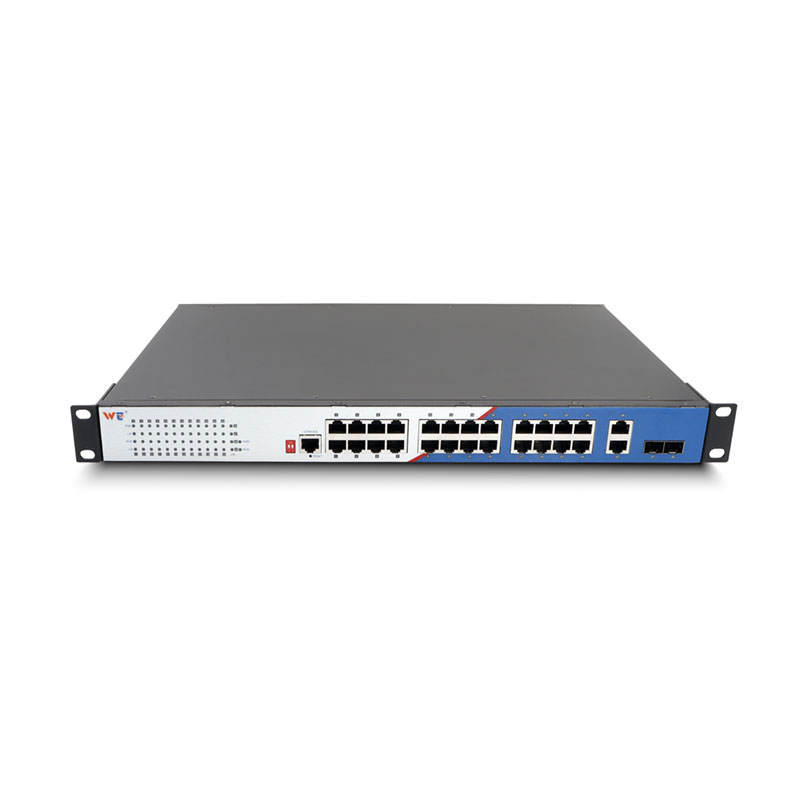
Final thought — when thermal strategy is tight, network uptime stays tight too. WINTOP gets that — their parts and docs make spec-to-deploy handoffs cleaner, so teams spend less nights in the rack. — Trust the parts that show their heat, not the ones that hide it.