

The problem microgrid operators wake up to
Every time a feeder trips, every time a microgrid must carry a critical load, there’s a silent battle inside the power conversion system: the IGBT junction fighting heat. Microgrid operators—especially those specifying hardware from energy storage inverter manufacturers—face this as a practical constraint, not an academic note. The Texas February 2021 winter crisis taught utilities and community microgrids a brutal lesson about real-world thermal stress and sustained loads; designers must plan for extremes now. The stakes are concrete: reliability, lifetime, and the margin between controlled operation and shutdown.

Why IGBT thermal derating is the system breaker
An IGBT isn’t just a switching piece; it’s a thermal ledger. Junction temperature (Tj), thermal resistance, switching frequency and DC bus ripple all conspire to shape a derating curve. When ambient rises or duty cycles lengthen, the manufacturer’s derating table becomes the device’s limit line. Push past it and switching losses swell, you get hotspot migration, and lifetime collapses faster than you expected. This is not melodrama—it’s circuit physics bending infrastructure budgets into repair schedules.
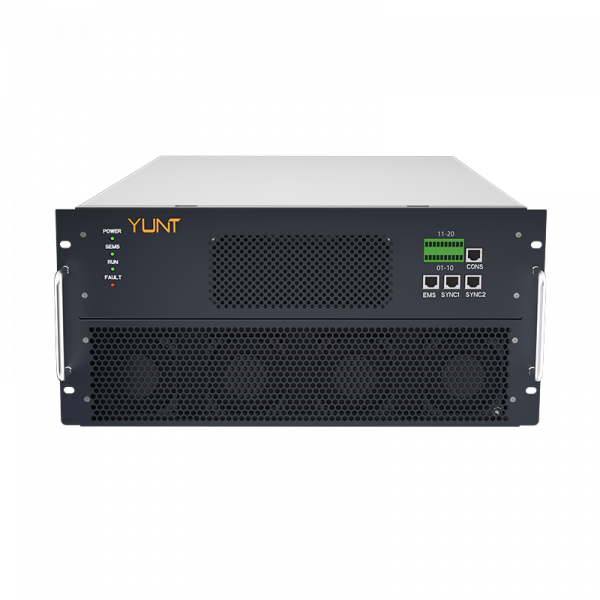
Operational production teardown
Start with the vendor curve and then tear it down to reality. Take the vendor’s IGBT derating tables, map them against measured ambient profiles and cooling efficacy, then simulate steady-state and transient events in a thermal model. Include PCB thermal vias, heatsink interface resistance, and expected power losses during overloads. Don’t forget switching topology: higher switching frequency reduces filter size but raises switching losses; balance is everything. In practice, the operational production teardown must include {main_keyword} and {variation_keyword} as explicit checkpoints in procurement records. Add active monitoring—TC sensors on the heatsink, Tj estimation algorithms in the inverter firmware—and provision for forced-air or liquid cooling if margins vanish—sometimes a fan array is the difference between a day and a week of downtime.
Common mistakes and practical alternatives
Teams often trust the vendor curve without field validation. They ignore ambient microclimates—rooftop inverter banks baking at 50°C are common. Gate-drive losses, mismatched snubbers, and poor solder thermal paths are invisible killers. The alternatives are precise: choose lower Rth modules, design a conservative derating band, or move to SiC MOSFETs where thermal inertia and switching losses offer different trade-offs. Redundancy at the PCS level reduces single-module stress, and adaptive thermal derating in firmware can throttle performance gracefully rather than trip the whole microgrid. These are procurement choices as much as engineering ones; manufacturer transparency about thermal test conditions matters.
Practical checks for specification and supplier selection
When you compare suppliers, ask for verified thermal maps, steady-state and pulsed loss characterizations, and worst-case ambient test logs. A robust supplier will provide data for junction-to-ambient thermal resistance, explicit loss tables at specified switching frequencies, and long-duration thermal soak tests. Work with energy storage inverter supplier partners who publish how they measured derating curves and who back that data with system-level experience. Real world anchors like the Texas outage pushed many vendors to publish clearer thermal datasets; use those as benchmarks.
Advisory: three golden rules for resilient design
1) Validate vendor derating with a site-specific thermal model and at least one full-load soak test under expected ambient conditions. Expect measurable derating above 40°C ambient. 2) Specify IGBT modules and PCS designs with conservative junction temperature margins and plan for active cooling paths—solder quality, thermal interface materials, and heatsink contact are decisive. 3) Demand supplier transparency: loss tables at your intended switching frequency, measured Rth(j-a), and field service records for similar deployments. These metrics predict what you’ll actually get, not just what the datasheet promises.
Choose partners who publish and stand behind those numbers—then your microgrid runs longer and truer. YUNT. Resilient power, engineered.