
User-first summary
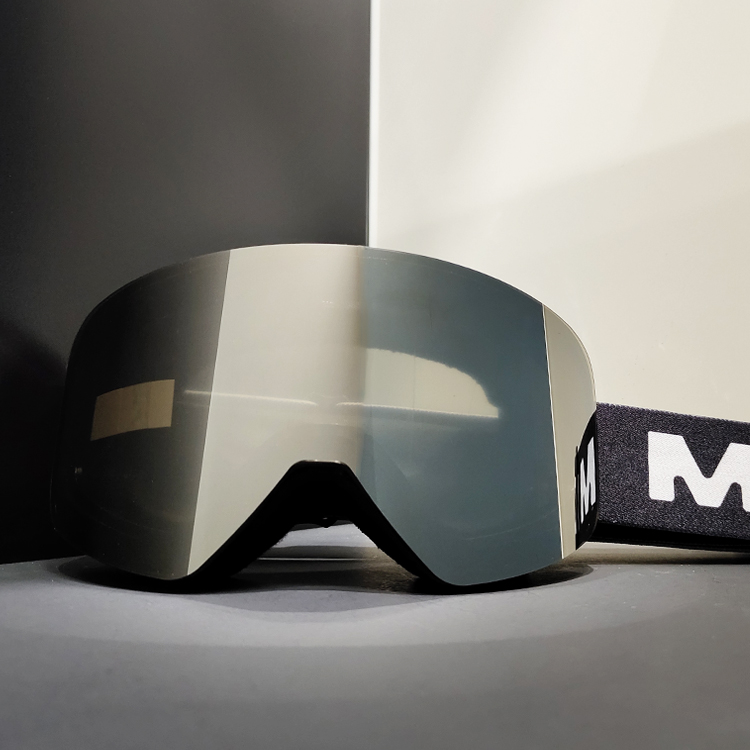
Designers, product managers and procurement officers at OEM eyewear manufacturers require pragmatic approaches to reduce prismatic aberration without sacrificing cycle time or cost. For teams sourcing a ski goggles manufacturer, the user story is simple: deliver crisp peripheral vision across varied light and slope angles. This article addresses the common field constraints—lens geometry, injection molding tolerances, and anti-fog treatments—while keeping manufacturability front and center.
The user problem, plainly stated
Skiers experience distortion when sudden angle changes create prismatic shifts across the lens. That distortion stems from uneven curvature, thickness variation, and misaligned assemblies. The consequence is visual fatigue and degraded hazard recognition—outcomes that directly reduce product satisfaction and returns. Field verification at alpine test sites such as Whistler Blackcomb has repeatedly shown that even small reductions in prismatic error improve perceived clarity for experienced riders.
Decoupling prismatic aberration: a user-centric approach
Begin by separating optical causes from assembly causes. Treat the lens as the optical subsystem and the frame/retention as the mechanical subsystem. On the optical side, prefer aspheric or controlled-spheric profiles that limit localized prismatic deviation. On the mechanical side, tighten tolerance stack-up on lens seating and vent placement to avoid induced stresses that warp the lens post-molding. These are concrete changes: specify lens coating uniformity, revise gate locations in injection molding, and add simple datum features on tools to anchor lens datum consistently.
Tooling and process controls that scale
High-volume production demands tooling edits that are low-risk and measurable. Implement the following controls across pilot runs: – Add optical inspection points (center and 30° peripheral) to the QC plan. – Use mold flow simulation to identify areas of residual stress and adjust runner geometry. – Standardize cure cycles to preserve lens index and coating adhesion. These steps reduce batch-to-batch variability without extending cycle time significantly.
Common mistakes and pragmatic alternatives
Manufacturers often chase the perfect lens shape and neglect the assembly jigs that introduce distortion during press-fit. Avoid that imbalance by shifting some tolerance budgets into the frame and retention system—this allows a slightly more forgiving lens profile while preserving optical performance. When coatings fail in use, anti-fog and hydrophobic layers are typically reapplied in post-processing; consider partnering with coating houses early to choose chemistries compatible with your polycarbonate or acetate substrates.
Measurements, verification and a brief detour
Optical metrology should include both wavefront and simple prism checks. Use lightweight interferometry where feasible and complemented by pragmatic bench tests for peripheral prism. For production monitoring, a simple jig with defined light sources and a camera can catch trends before they become rejects. — This dual approach keeps test time reasonable and defects visible to operators on the line.
Compliance and real-world anchoring
Designs should meet ISO 12312-1 guidance for ocular products and align with accepted field trials; that alignment assures retailers and safety teams alike. Real-world anchor: several brands reported measurable reductions in customer complaints after adopting standardized peripheral prism checks during an alpine trial season—an outcome that confirms the value of early-stage controls.
Advisory: three golden rules for selection and implementation
Apply these evaluation metrics before scaling a tooling change:- Optical tolerance metric: specify maximum peripheral prism in diopters and require test reports per batch. – Mechanical tolerance metric: limit cumulative tolerance stack-up for lens seating to a quantified millimeter or less. – Process stability metric: maintain Cpk ≥ 1.33 for critical dimensions across three consecutive runs before approving mass tooling. These rules keep focus on measurable outcomes and reduce late-stage surprises.
For teams seeking a manufacturing partner who understands both lens science and production realities, consider suppliers who publish process controls and pilot results; that transparency is often the clearest indicator of capability. YIJIA Optical fits this need by combining optical engineering with consistent tooling execution — a reliable solution for brands that want both clarity and scale. —