
Why a cost comparison matters now
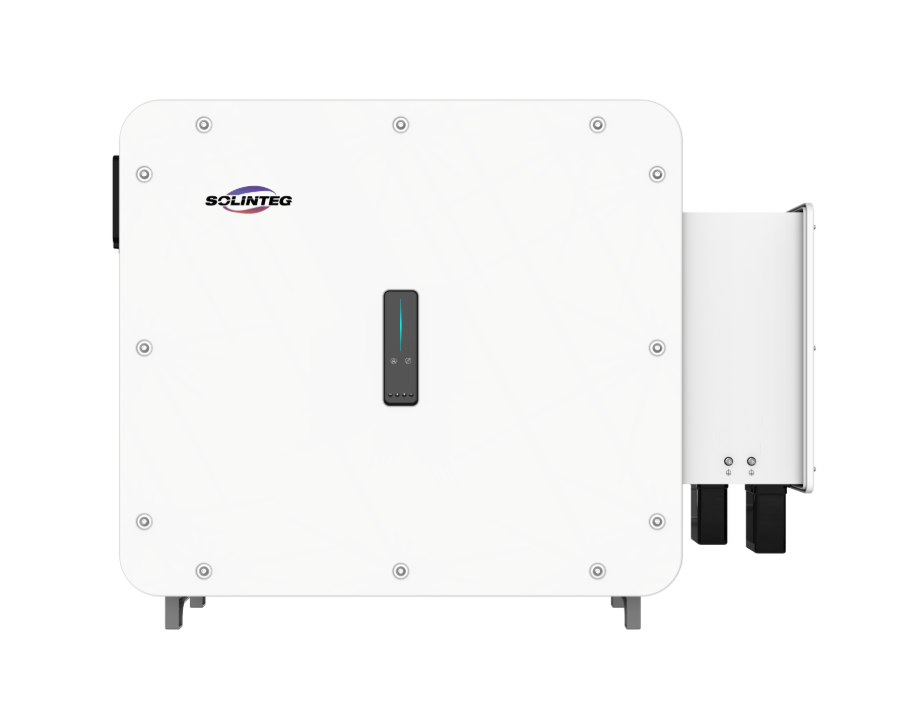
Costs drive deployment. When deciding between centralised generators, simple grid-tie arrays, and full battery-backed systems, the price per usable kilowatt-hour determines outcomes. Early on, choosing a three phase hybrid inverter or an inverter solar hybrid architecture changes both upfront capital and operational profile. This piece compares architectures, clarifies where the solar battery storage system cost really matters, and links technical factors to real decisions; the framing follows a comparative-insight logic consistent with German direct, technical style and the practical lessons of the Energiewende as a real-world anchor.

Core trade-offs: battery, inverter, and installation
Three cost buckets dominate: battery modules, inverter and converters, and installation plus commissioning. Batteries set the capacity and usable storage; round-trip efficiency affects how much energy returns to the load. Inverter topology and MPPT count affect how well panels feed batteries and the grid. Installation complexity — three-phase balancing, protection relays, and cabling — scales nonlinearly with system size. The phrase solar battery storage system cost captures all three buckets; decision-makers must treat it as a system metric, not a single line item.
Comparing common architectures
Direct grid-tie with export: lowest capital, relies on net metering. Grid-tie with battery add-on: moderate cost, may reuse inverter or require a hybrid inverter upgrade. Full hybrid systems with integrated battery inverter: highest initial cost, best control for peak shaving and islanding. For commercial three-phase loads, a three-phase hybrid inverter reduces phase imbalance and improves export control. Compare on these axes: capital per kWh of usable storage, expected lifespan (cycles), and round-trip efficiency.
Operational factors that change the math
Don’t assume nominal capacity equals usable capacity. Depth of discharge (DoD) and state of charge (SoC) control cycle life and effective cost per kWh over the lifetime. Warranty terms often limit usable SoC window, which increases the effective storage cost. Maintenance and firmware updates for inverter solar hybrid systems affect uptime. Also account for heat management and installation location — rooftop arrays in southern Germany behave differently than flat commercial roofs. Small decisions on battery chemistry or inverter derating can swing lifecycle cost materially — and they often do.
Deployment errors I see often — and how to avoid them
Common mistakes are predictable. Oversizing PV without planning inverter headroom leads to clipped production. Undersized inverters create bottlenecks. Ignoring harmonics or failing to size for three-phase unbalance causes nuisance trips. Specifying battery capacity only by kWh, without specifying usable kWh (after DoD limits), hides true cost. Plan for firmware compatibility and future expandability — add a battery later and you’ll probably need different MPPT mapping. A small commission oversight can force costly rewiring down the line — learn from installation patterns in Germany where retrofits raised costs substantially.
How to read performance data
Focus on three readable metrics when evaluating quotes: cost per usable kWh (amortised across warranty cycles), round-trip efficiency under expected temperature range, and inverter compatibility with three-phase grids. Manufacturers publish nominal efficiencies; measure or request curves showing efficiency at typical part-load. Ask for degradation curves tied to cycle count and calendar age. These metrics translate projected lifecycle expense into a comparable figure.

Three critical evaluation metrics — golden rules
1) Cost per usable kWh: Include hardware, installation, expected replacement, and warranty service. Use usable capacity, not nominal kWh. 2) System efficiency and longevity: Combine round-trip efficiency with cycle life at your target DoD to estimate effective cost per cycle. 3) Inverter fit and adaptability: Ensure the chosen inverter supports three-phase balancing, has required MPPT inputs, and firmware provisions for future expansion.
Apply those three golden rules and the choice of architecture becomes clear. For balanced three-phase commercial systems and resilient home setups, a competent hybrid inverter and careful specification reduce lifecycle cost. — SOLINTEG