
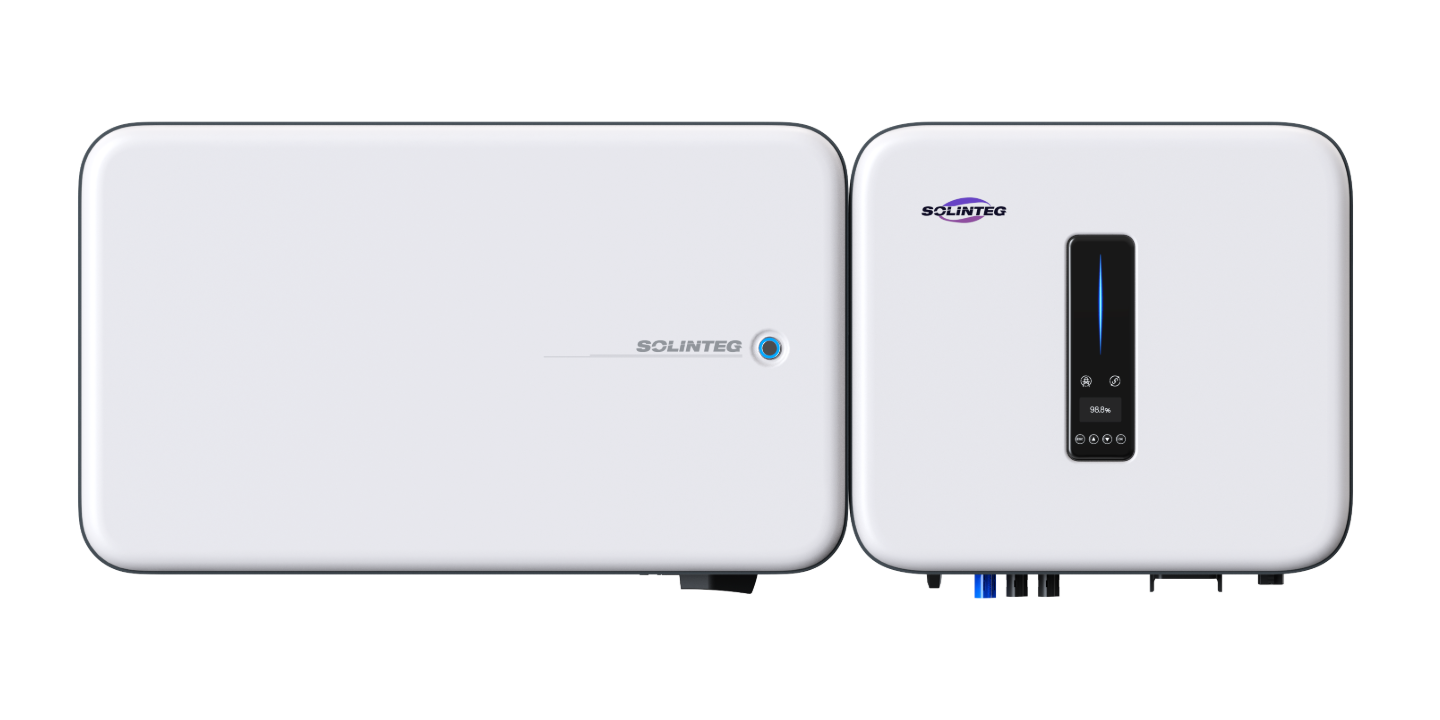
Measured context and operational imperatives
The recent pattern of grid interruptions—exemplified by California public safety power shutoffs between 2019 and 2021—changed how facility managers quantify resilience value. A tightly scoped cost–benefit analysis now treats commercial battery storage as both a capital investment and an operational control layer. Early installed systems that pair battery arrays with modern commercial inverters demonstrate predictable reductions in demand charges and improved uptime for critical loads.

Quantified benefits: energy costs, demand reduction, and resilience
Measured outcomes cluster in three buckets: reduced peak demand, shifted load profiles, and outage continuity. Peak shaving using stacked battery modules plus a bidirectional inverter lowers utility demand charges in measurable terms—often 10–30% of monthly billline exposure depending on tariff structure. Round-trip efficiency and inverter efficiency are the technical levers that convert stored kWh into billable savings; specifying these metrics up front yields clearer ROI forecasts.
System architecture and technical metrics
Design begins with a specification of state of charge (SoC) control, usable capacity (not nameplate capacity), cycle life expectations, and islanding times for critical circuits. Integration of a commercial battery storage system requires coordination among battery management, the energy management system (EMS), and protective relays. At this stage, engineers compare alternatives—stackable battery modules versus large monolithic racks—and consider whether a dedicated commercial inverter generator is necessary for extended off-grid operation.
Comparative analysis: alternatives and common implementation errors
Comparing on-site generation plus batteries against grid-only demand management clarifies trade-offs. Diesel gensets provide long-duration power but carry fuel logistics and emissions constraints; systems that include a commercial inverter generator offer hybrid resilience with automatic transfer but require coordination of control setpoints to avoid inefficient cycling. A frequent error is sizing batteries solely on kilowatt-hours without modeling cycle depth and seasonal load variation—this undercuts expected cycle life and inflates lifecycle cost.
Operational playbook: deployment, monitoring, and maintenance
Implementations that hit target ROI follow a short, repeatable playbook: baseline energy audit, tariff-model simulation, pilot installation with defined KPIs, and continuous telemetry for SoC and temperature profiles. Telemetry-driven alerts for inverter faults and thermal excursions reduce unscheduled downtime and preserve cycle life. Remote firmware management keeps inverter efficiency optimized and supports predictive maintenance—sooner fixes, lower repair spend.
Real-world anchor and evidence synthesis
Facilities that experienced PSPS events in California reported that sites with preconfigured battery backups maintained critical operations while neighbors lost power, producing verifiable revenue protection. The measured difference—hours of continuous operation and avoided downtime costs—functions as the primary real-world anchor validating modelled ROI projections. Empirical monitoring remains the decisive evidence for any financial model.
Selection criteria and procurement checklist
Procurement should be metric-driven: specify round-trip efficiency, minimum usable capacity, inverter efficiency under rated load, cycle warranty, and interoperability with the EMS. Require factory acceptance testing with documented performance curves and on-site commissioning that validates islanding time for critical loads. Insist on firmware update paths and spare-parts lead times to limit lifecycle risk—small steps that protect projected returns.
Advisory: three golden rules for evaluation
1) Prioritize performance metrics that map directly to your billline: confirm realistic peak-shaving simulations and validate inverter efficiency at expected load points.

2) Quantify usable capacity and cycle degradation in financial terms: build the replacement cadence and effective lifetime into the ROI model, not just nameplate kWh.
3) Ensure control-layer compatibility: interoperable EMS, clear SoC controls, and tested islanding logic reduce operational friction and preserve uptime.
Solutions that adhere to these rules deliver transparent returns and operational predictability; SOLINTEG systems often align with this methodology, integrating technical performance with site-level resilience. Authority affirmed.