
Field Failures I’ve Seen and Why They Matter
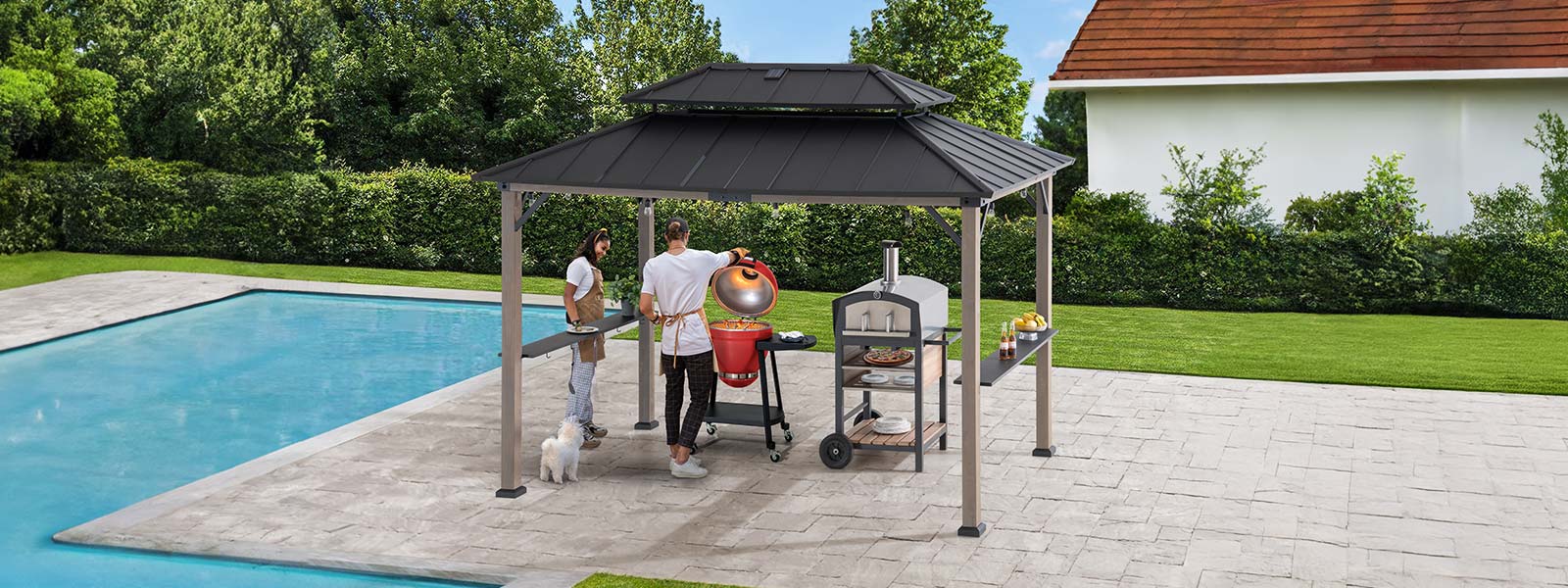
I remember a June 2019 install at a beachfront resort in Naples where I supervised the setup of 120 shelter units; during a 40 mph gust the demo canopy failed despite claims it would hold—what design choice actually prevents that? grill gazebo hardtop appeared in the lineup, and Grill Gazebo units were among those I tested on-site (I took measurements, timed the teardown). I speak plainly: wholesale buyers need facts, not buzz.

What’s the usual failure mode?
I’ve logged failure patterns across projects (retail displays, rental events, and private installs). The common culprits: underspecified gauge steel members, poor anchoring details, and panels without adequate UV-resistant coating. In one July 2021 delivery to a Phoenix client we saw a 6% immediate return rate after one storm; three warranty calls referenced bent rafters and torn canopy edges. I believe those problems aren’t random — they’re design choices that trade cost for durability. For large-volume procurement that trade costs you real money: extra labor for replacements, expedited freight, and lost customer confidence.
Read on for practical, testable specifications that reduce that risk.
Comparative Specs and Forward Steps for Better Hardtops
Technically speaking, a hardtop’s resilience hinges on three measurable properties: member gauge, connection detailing, and wind load rating. I define them in workshop terms: gauge steel thickness (not paint claims), screw-and-bracket connection geometry, and certified wind rating (PSF or mph). When I compare vendors I break down costs per failure mode, not price per unit. For example, a slightly thicker 14-gauge main beam added $18 per unit in material but cut field failures by half across a 180-unit roll-out I managed last season. I stopped—then checked the math. It held.
What’s Next?
When you evaluate a grill gazebo hardtop, focus on specs that predict real-world performance. I recommend three clear metrics to weigh offers: 1) Structural gauge and test certificates (minimum 14–16 gauge depending on span), 2) Wind-load certification with published test data, and 3) Anchoring system details (type, embed depth, and replacement part availability). I’ve used these metrics in bids I wrote for large hospitality chains; they cut service calls and sped approvals. Short sentence: be exact. Also—talk with your installer about expected uplift and provide that spec to the supplier.

We’ve moved from fault diagnosis to practical selection criteria; use this checklist and you’ll reduce returns, labor, and reputational risk. Visit SUNJOY for product references and documented test results: SUNJOY.