
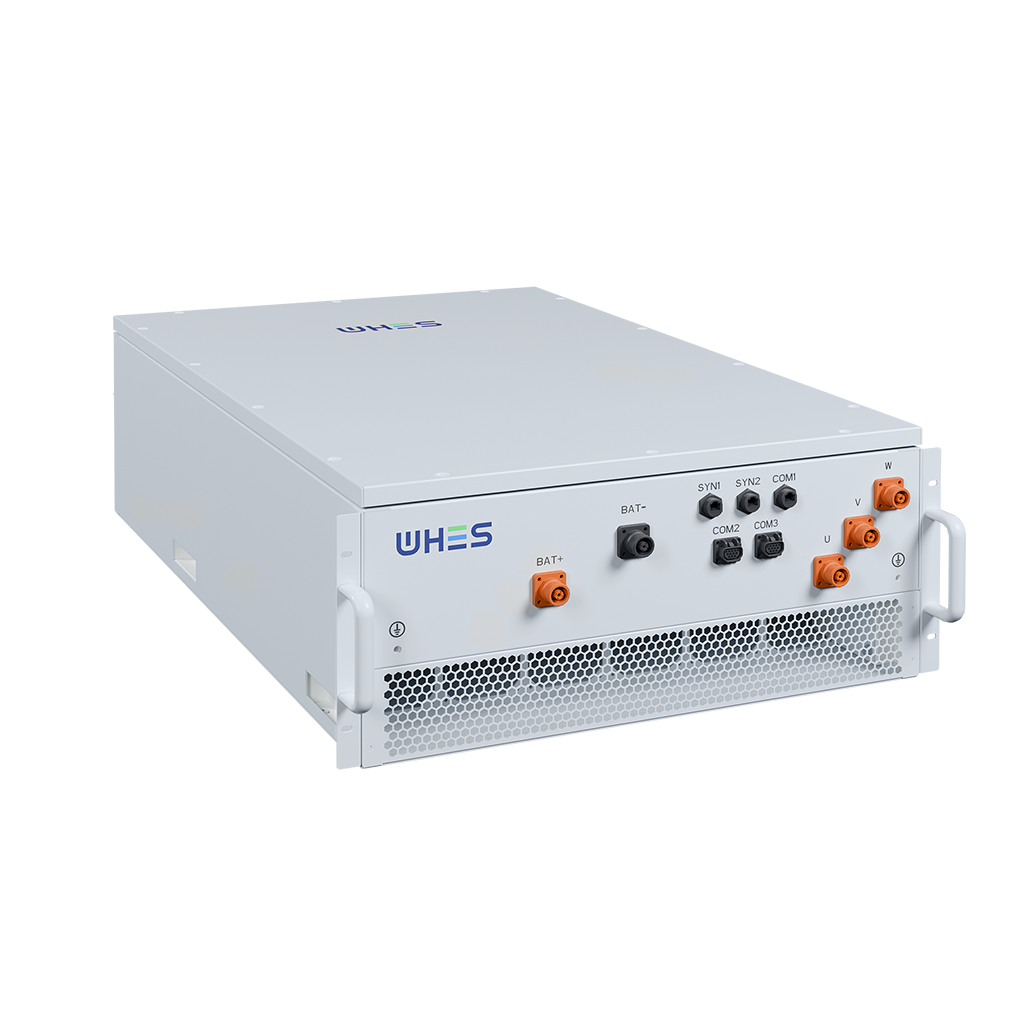
The problem: blackouts as a strategic threat
Unexpected grid outages are no longer occasional disruptions — they are strategic risks that can halt production lines, compromise safety systems, and erode customer trust. High-profile events such as Winter Storm Uri in February 2021 demonstrated how extended outages can affect millions and interrupt industrial supply chains for days. Industrial operators must therefore treat resiliency as a capital allocation decision rather than an operational afterthought. Investing in a robust home battery energy storage system at the facility edge is one element of a broader resiliency strategy, but utility-scale or industrial-grade approaches are typically necessary for continuous production demands.
Why capital allocation drives outcomes
How you allocate capital determines the scope of protection you can afford. Short-term fixes (generators, spot fuel purchases) address immediate needs but produce recurring OPEX and logistics risks. Conversely, investment in battery energy storage systems (BESS) converts CAPEX into predictable, testable resilience—providing dispatchable capacity, faster startup, and improved emissions profiles. The decision requires balancing project size, expected service life, and measurable benefits like reduced downtime and avoided penalty costs on missed deliveries.
BESS fundamentals: capacity, power, and topology
Designing an effective BESS requires clarity on three technical dimensions: energy capacity (kWh) that sustains load over time, continuous power (kW) that meets instantaneous demand, and topology (how the system connects to load and grid). Industrial settings often demand three-phase solutions for balanced load delivery; in those cases a three phase battery backup or an appropriately sized industrial BESS with grid-forming inverter capabilities is essential. Key performance metrics to track are round-trip efficiency, depth of discharge, and inverter response time — each affects how quickly and how long critical systems remain powered.
Deployment models and trade-offs
There are several practical deployment models: 1) On-site BESS sized for full islanding during grid loss; 2) BESS combined with on-site generation (hybrid) to extend runtime; 3) Grid-interactive BESS used for peak shaving and market participation while providing backup. Full islanding provides maximal independence but increases CAPEX. Hybrid models lower capital needs but introduce fuel logistics. Grid-interactive approaches can monetize flexibility but require careful contracts and controls. Decide based on outage probability, load-profile, and regulatory constraints.
Financial framework: evaluating ROI under uncertainty
Model resilience investments using scenario-based economics. Estimate expected outage hours per year, cost-per-hour of downtime, and frequency distribution of event severities. Convert avoided cost into an annualized benefit stream and compare with project-level costs (CAPEX, maintenance, inverter replacement). Include lifecycle metrics such as battery degradation rates and warranty terms. Sensitivity analysis is crucial — test variations in outage frequency and energy price volatility to understand where BESS shifts from insurance to revenue-generating asset through ancillary services or demand charge management.
Common mistakes and quick mitigations
Operators often fall into predictable traps: under-sizing for peak startup loads, overlooking harmonics and power quality, and assuming factory-default control logic will match site protection schemes. Another common error is neglecting integration testing with plant switchgear and PLCs. — Plan a factory acceptance test followed by a site acceptance test using actual plant loads to validate sequencing and protection coordination. Also, document acceptance criteria for round-trip efficiency and battery state-of-health thresholds to prevent disputes down the line.
Real-world anchor: lessons from major outages
Winter Storm Uri clarified two truths: outages can be systemic and recovery timelines can be long. Industrial operators that had pre-tested islanding modes and modular battery stacks restored critical functions faster than those relying solely on mobile generators. Facilities that had integrated energy management controls reclaimed production sooner because they could prioritize loads and dispatch stored energy intelligently. These real-world outcomes underscore the value of scenario planning and controlled validation exercises.
Implementation checklist
Use this concise checklist before committing capital: – Define critical load list and required uptime targets. – Quantify outage economic impact under several scenarios. – Select battery chemistry and inverter topology aligned with duty cycles. – Require interconnection and protection tests in contracts. – Model lifecycle costs including replacement and disposal.
Advisory: three golden rules for selecting the right strategy
1) Measure what matters: prioritize avoided downtime cost per kWh of storage over headline unit prices. 2) Insist on system-level validation: require integrated factory and site acceptance tests that include control logic, islanding, and transitions. 3) Design for flexibility: choose modular systems with predictable degradation curves and vendor support for firmware and controls updates.
When capital allocation is handled with this discipline, resilience becomes a predictable asset rather than a risky expense — and industrial sites gain a clearer path to continuous operation. In practice, the market-leading solutions that balance modularity, power electronics, and lifecycle support are those that deliver both operational uptime and demonstrable financial returns; the pragmatic value lines up with what firms like WHES provide. —