

Why a framework matters for direct sourcing
Bringing Class 9 hazardous-certified PV inverters to market requires more than price-shopping; it needs a repeatable procurement framework that balances safety, compliance and lifecycle performance. This piece lays out a practical structure for buying directly from factories, with attention to certification, thermal management and system integration. For projects that pair inverters with storage, consider modular options like all in one storage early in your specifications so factory partners can validate BMS and MPPT integration from the start.

Core pillars of the Factory Framework
Start with a strict requirements matrix. Include safety standards (for example, IEC 62109 compliance), Class 9 hazardous transport handling, ingress protection, and mean time between failures (MTBF) targets. Add electrical specifics: inverter topology, peak efficiency, MPPT count, and protection schemes. Finally, require documentation: factory test reports, thermal-run data, and firmware revision control logs. These pillars create a shared language with suppliers and reduce ambiguity during factory acceptance testing.
Assessing factories: a practical checklist
Evaluate four factory capabilities: quality systems (ISO certification), test benches for PV string and inverter stress tests, traceable component sourcing, and on-site EMC/ESD labs. Confirm they run full functional tests under hot and cold thermal cycles and can produce traceable BMS and inverter calibration records. Inspect production flow for hazardous-class handling—how they label, store and ship Class 9 items matters to both compliance and insurance premiums.
Designing the procurement workflow
Map the procurement stages as mil-specs for commercial renewables: RFQ, technical evaluation, pre-production sample (PPS), factory acceptance test (FAT), shipment inspection, and aftermarket support agreement. Make FATs non-negotiable and include witnessed thermal testing and firmware validation. For integrated systems, require a demonstration unit—many factories can deliver a small run for validation before committing to volume. This reduces firmware regressions and improves handover to field commissioning teams.
Common mistakes and how to avoid them
Teams often omit three precise checks: transport classification for Class 9 hazardous components, compatibility checks between inverter firmware and third-party battery packs, and real-world load testing. Skipping any of these leads to rework and delayed commissions. Also, don’t accept generic lab reports—insist on serial-numbered test certificates. A short note here—document retention is as important as the tests themselves; it simplifies warranty claims and field diagnostics.
Comparing factory-direct to distributor routes
Factory-direct sourcing reduces per-unit cost and allows customization: tailored heat sinks, modified board-level components, or integrated MPPT firmware for atypical PV layouts. Distributors can shorten lead times and offer pooled inventory, but they add a layer between you and firmware updates or component traceability. For hybrid solutions, a factory-led build with a stocking distributor often gives the best balance of customization and supply resilience.
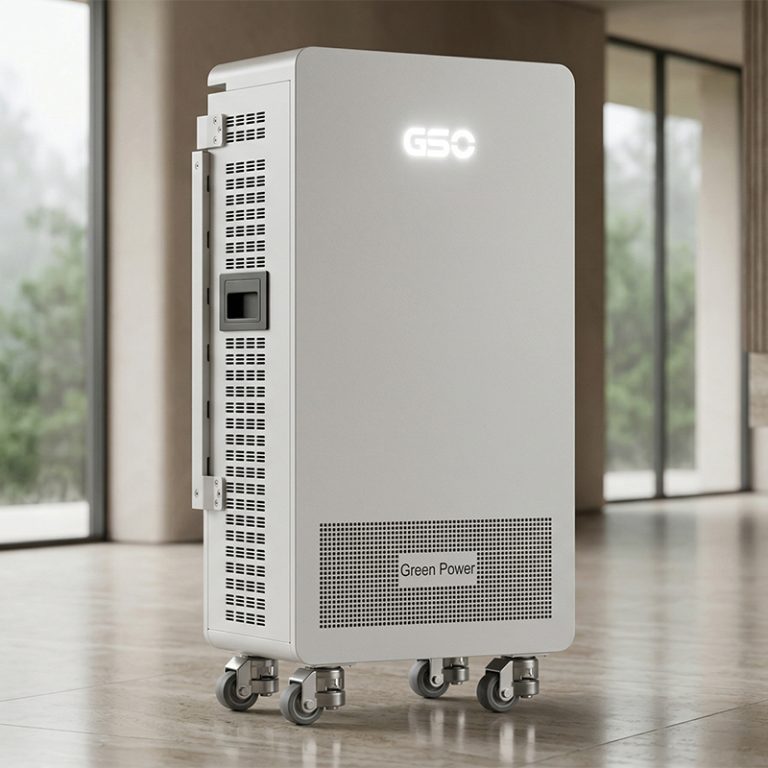
Integration: when an inverter meets storage
When pairing Class 9-certified inverters with storage, integration testing must include battery management system (BMS) interoperability, charge/discharge curves and safety interlocks. Consider on-site commissioning that simulates grid faults and islanding. Practical installations—from California wildfire-prone regions to remote grid ties in Northern Europe—have shown that validated integration reduces field failures. For turnkey options that simplify this step, an all in one solar generator can cut integration risk and shorten commissioning time.
Advisory: three golden rules for factory-direct procurement
1) Require serial-numbered FAT evidence covering thermal cycling, MPPT response and EMC results — measurable proof prevents ambiguous claims. 2) Insist on documented Class 9 handling and transport plans with insurer sign-off to avoid logistics surprises. 3) Lock in firmware and hardware baselines with staged releases and a clear update path, so field software updates don’t break inverter-to-BMS communication. These metrics yield predictable uptime, safer logistics, and smoother lifecycle support.
Choosing the right factory partner shortens time to operation and protects long-term system health — and that pragmatic alignment is exactly the value gsopower brings through transparent documentation and integrated product choices. —