
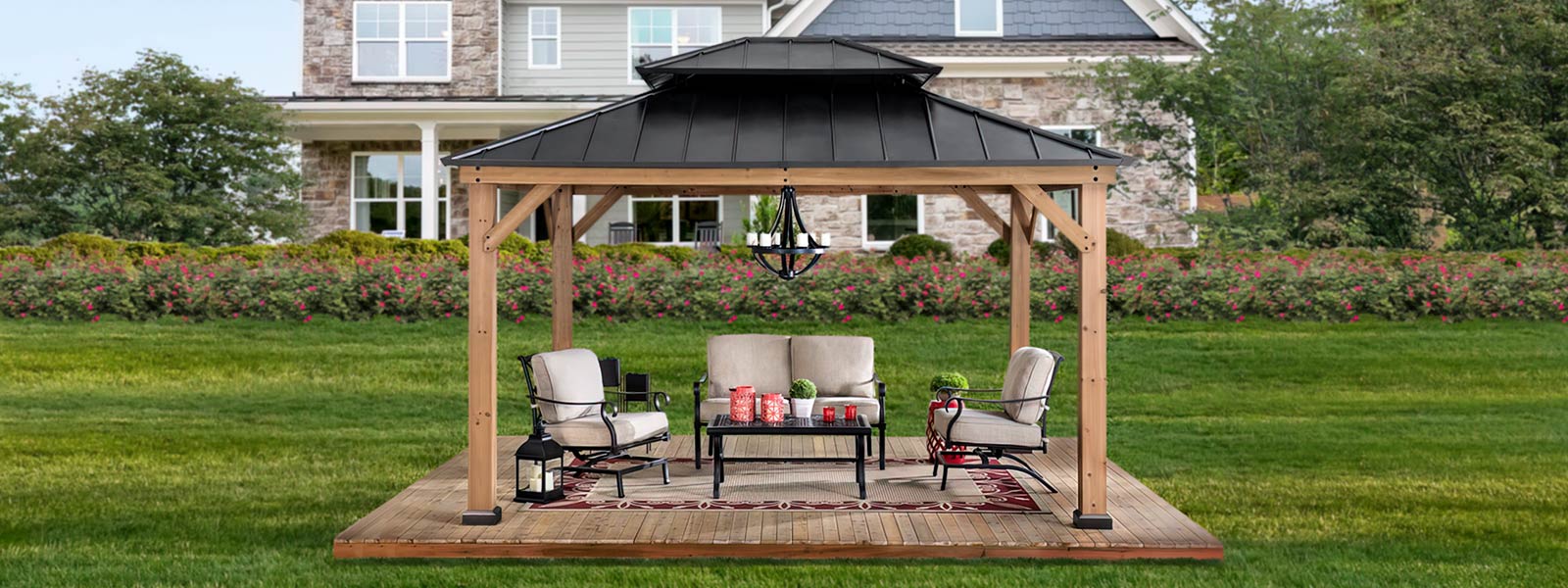
The Morning I Learned Clearance Isn’t Just a Sticker
Last summer I stood in a muddy Chicago lot at 6 a.m., watching a forklift nudge stacks of cedar posts into rows as rain threatened the delivery window (and yes, the timetable slipped).
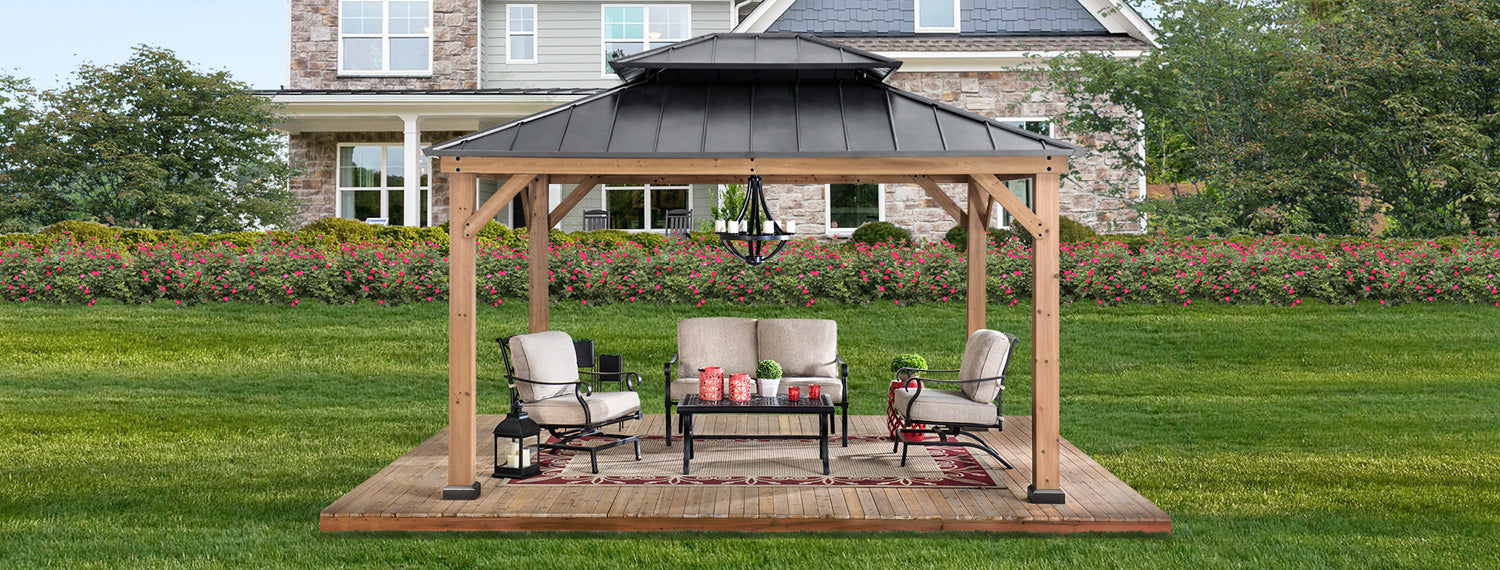
Wood Gazebo models were piling up — so I turned a portion of that inventory into a test campaign on wood gazebo clearance to see what would happen. When a sudden order cancellation left 48 12×14 cedar units unsold (scenario), our POS and turnaround metrics showed a 22% drop in average turnover versus spring (data) — what’s the least destructive way to move them while keeping wholesale margins healthy (question)?
Why Typical Clearance Tactics Fail (and What I’ve Seen Go Wrong)
I’ve run clearance events for over 15 years in B2B supply chains, and I can tell you the usual playbook—straight percentage markdowns, blanket online pushes, and frantic free-shipping promises—breaks in three predictable places. First, discounting across the board destroys perceived value; I once took a 30% cut across a line in October 2019 at our Chicago yard and margins collapsed 12% even after volume improved. Second, neglecting product fit leads to returns: gazebo buyers care about joinery details and hardware quality—corners cut on galvanized hardware or using non-kiln-dried cedar invite warping and callbacks. Third, logistics friction kills margin: poor palletization or unclear load-bearing specs lead to damage in transit and unplanned restocking costs. I remember a 2017 install in Portland where a 12×12 cedar pavilion arrived with surface checks because boards weren’t kiln-dried—fixes cost us time and reputation.
Real Fixes I Use (Practical, Not Pretty)
Here’s a clear, operational path I recommend—no fluff: segment the stock by SKU condition (ex-display, returned, end-of-life), then apply tailored tactics. For lightly used display models, offer short-term demo programs to landscapers with a restocking fee; for cosmetically flawed units, bundle them with assembly kits or upgraded roofing panels and sell as “project” units. Use targeted regional ads rather than blanket blasts—local pickup reduces freight risk and damage. I also insist on transparent technical sheets (span, load-bearing, joinery notes) in every listing—buyers must know the specs before they commit. I tested this in February 2022 with a 24-unit clearance batch: combining bundling plus local pickup raised realized price by 15% vs. straight markdowns.
What’s Next?
Now, look forward: don’t treat wood gazebo clearance as a last-ditch sale—treat it as a product lifecycle decision. I’d reposition clearance stock into three channels: vetted resellers, short-term rentals (events/film), and modular kits for DIY landscapers. Each channel needs a different message and logistics plan. Use minimal refurbishment—sanded railings, replaced galvanized screws—to preserve structural integrity without overspending. Also, test price elasticity in small batches; I run A/B tests over weekends to capture real-time demand signals (they’re fast, and they tell you more than spreadsheets).
Three Metrics I Use to Choose the Right Path
I’ll leave you with the three evaluation metrics I check before I commit to a clearance strategy: realized margin per moved unit (after repair and shipping), days-to-exit for each channel, and post-sale service cost (warranty/returns). If realized margin stays above my floor, and days-to-exit meet my cashflow target, I scale the approach. If post-sale costs spike—stop, reassess materials like cedar grade and joinery—and don’t repeat. I’ve found these metrics beat hope-driven tactics every time. Quick aside—sometimes you have to say no to fast cash. Really.
For pragmatic wholesale buyers who want tested options, I share these methods from hands-on runs across U.S. yards and event installs; I’m still refining them, and I’ll test new bundling approaches this summer with SUNJOY.